 Skip to content
 Online Anxiety & Stress Counselling in India
Feel calmer. Think clearly. Take back control.
When worry, overthinking or stress starts affecting your sleep, work or relationships, you don't have to manage it alone. Talk to a qualified psychologist online, from wherever you feel comfortable.
- Qualified psychologists
- Confidential, never recorded
- Personalised plan
- Online across India

Private one-on-one video sessions
When your mind won't switch off, it's time to talk
Maybe you're constantly thinking about what could go wrong, or small situations feel overwhelming.
Maybe you can't sleep because your mind keeps replaying the day, or you've started avoiding people and responsibilities because they trigger anxiety.
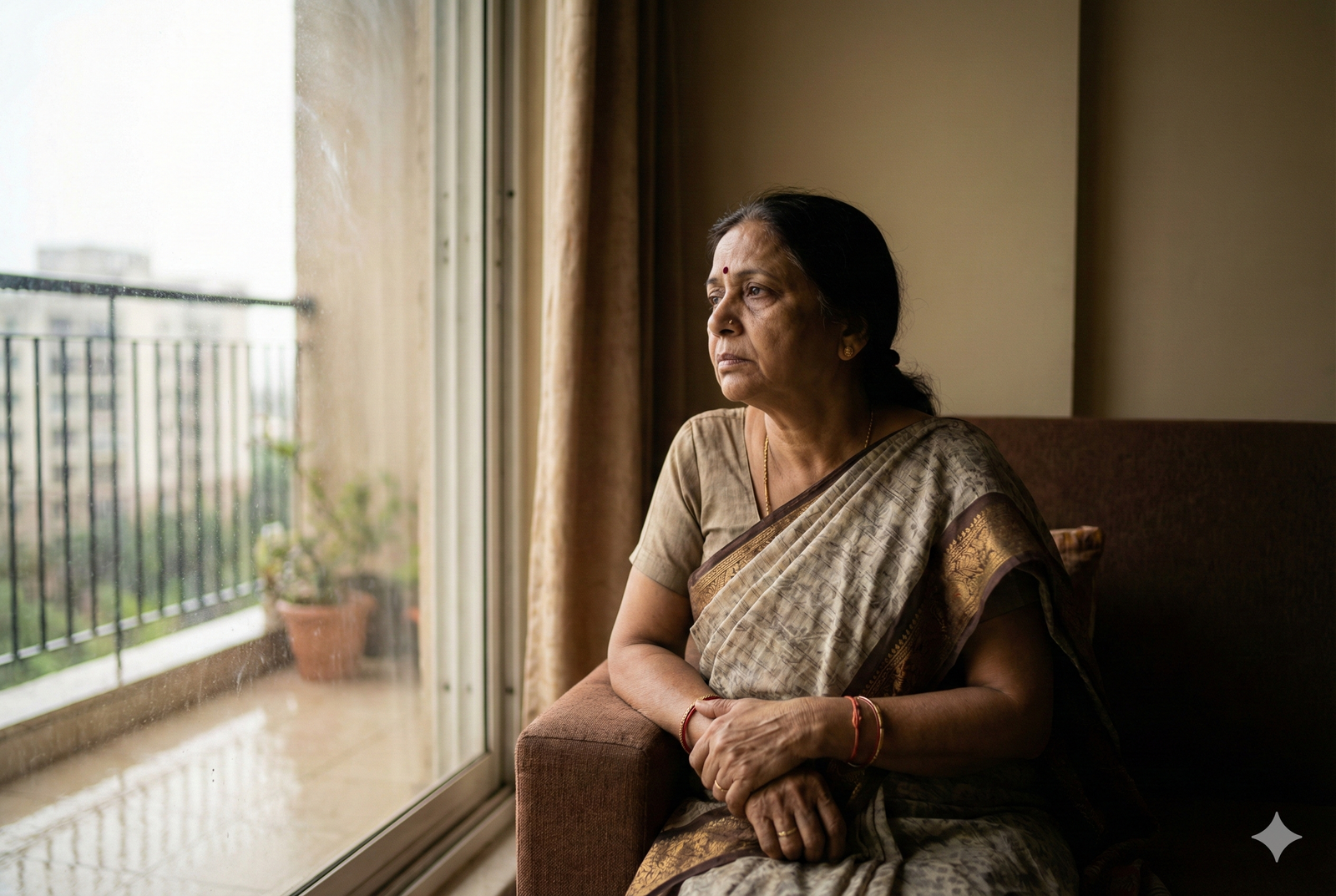
Are you struggling with any of these?
- Constant worrying or overthinking
- Feeling restless, tense or on edge
- Sudden panic or intense fear
- Trouble falling or staying asleep
- Racing thoughts
- Difficulty concentrating
- Work or exam pressure that won't ease
- Worrying about being judged
- Feeling emotionally overwhelmed
- Avoiding situations that make you uncomfortable
If any of these sound familiar, you don't have to handle them alone
You don't need to wait for things to become unbearable before asking for help.
What is anxiety? Understanding the difference between stress and anxiety disorder
Anxiety vs. everyday stress
Stress usually comes from something outside you: a deadline, an exam, a conflict or money worries. Anxiety is how your mind and body respond, and it can stay switched on long after the pressure has passed.
Think of anxiety as your body's alarm system. It's meant to protect you, but sometimes it goes off when there's no real threat. The difference lies in how long it lasts and how much it takes over.
- Everyday stressShort-lived, linked to a clear cause, eases when it passes.
- Prolonged stressLingers for weeks and is harder to switch off.
- Interfering anxietyStarts affecting sleep, work, relationships or plans.
- Anxiety disorderPersistent, intense and hard to control on your own.
What happens in your body when you're anxious
When your brain senses danger, a small region called the amygdala sets off the fight-flight-freeze response. Stress hormones such as adrenaline prepare you to act: your heart beats faster, your breathing quickens and your muscles tense.
That's useful when you need to react quickly. With anxiety, this response fires too often or too strongly, even in everyday situations.
Your thoughts
What if something goes wrong?
What will people think of me?
Racing, looping worries.
Your body
Racing heartbeat, sweating, muscle tension, shallow breathing or an unsettled stomach.
Your behaviour
Avoiding situations, procrastinating, seeking reassurance or withdrawing.
Your everyday life
Work, studies, sleep, relationships and confidence.
When anxiety becomes a disorder
Feeling anxious before a big presentation is normal. Anxiety may need professional attention when it lasts for weeks or months rather than days, feels out of proportion to the situation, and starts getting in the way of work, relationships or daily life.
For generalised anxiety disorder, for example, clinicians look for excessive, hard-to-control worry on most days for at least six months. Only a qualified professional can make that assessment, and you don't need a diagnosis to start therapy.
of adults in India need treatment for one or more mental health conditions.National Mental Health Survey of India, 2015–16
of people who need care for most mental health conditions in India don't receive it.Source: National Mental Health Survey of India, 2015–16
Types of anxiety people experience
- Generalised anxiety (GAD)Ongoing worry about many things, such as health, work, family or money, that's hard to control.
- Social anxietyIntense fear of being judged, embarrassed or watched in social or work situations.
- Panic disorderSudden waves of intense fear with a pounding heart, breathlessness or dizziness.
- Performance anxietyFear that spikes around interviews, presentations, exams or other high-stakes moments.
- Health anxietyPersistent worry about being or becoming seriously ill, even after reassurance.
- Work-related stress and anxietyDeadlines, pressure and workplace relationships that keep you on edge long after work ends.
Talk it through with a professional
You don't need to know which type fits you. Your therapist will help you understand what's going on and what to do next.
Counselling for stress and anxiety, built around you
There's no one-size-fits-all experience of anxiety. Your therapist starts by understanding your symptoms, triggers, thought patterns and everyday challenges, then builds an approach around what you need.
Together, you may work on
- Understanding what triggers your anxiety and stress
- Managing excessive worry and overthinking
- Developing healthier ways to cope
- Regulating difficult emotions
- Reducing avoidance
- Building confidence in difficult situations
- Handling work and performance pressure
- Setting healthier boundaries
Stress management that fits your life
Stress can build through work pressure, academic demands, relationship difficulties, money worries or big life changes. Counselling helps you understand what's adding to it and how to respond differently.
- Overwhelming thoughtsRecognise patterns of worry and rumination.
- Your triggersIdentify situations that add to your stress.
- Coping skillsPractical strategies for stressful moments.
- Healthier boundariesExplore perfectionism and saying yes to everything.
- Work stressPressure, performance and work-life balance.
- Emotional resilienceSteadier responses to hard situations.
If overthinking is the main thing, see overthinking counselling.
What brings you to counselling?
Whatever brings you here, you can start by talking about what you're experiencing.
Constant overthinking
Your mind keeps analysing conversations, decisions and possibilities, making it hard to switch off.
Work and performance stress
Deadlines, presentations, exams or fear of failure are affecting your wellbeing.
Social anxiety
You worry about being judged, embarrassed or misunderstood around others.
Panic and intense fear
Sudden waves of fear or physical symptoms leave you feeling out of control.
Sleep and anxiety
You feel tired, but your mind keeps racing when it's time to sleep.
Life changes and emotional overload
Relationship difficulties, career changes, loss or uncertainty leave you overwhelmed.

When to talk to a counsellor about anxiety
You don't need to wait until things feel unbearable. Reaching out isn't a sign that something is wrong with you. It's a practical step toward feeling better.
Feeling anxious right now?
Breathe along with the circle: in for 4 seconds, hold for 2, and out for 6. A slower out-breath can help your body settle.
It may be time to speak with a professional if
- Worry or stress has lasted more than a few weeks
- It's affecting your sleep, appetite or energy
- Work, studies or relationships are suffering
- You're avoiding places, people or tasks because of anxiety
- You're relying on alcohol or other habits to cope
- Panic attacks or physical symptoms are frightening you
Zenup is not an emergency service. If you are having thoughts of harming yourself or ending your life, call Tele-MANAS on 14416 or 1-800-891-4416 (free, 24/7), dial 112, or go to your nearest hospital.
Anxiety & stress counselling: what to expect
A clear path from your first conversation to lasting change. You set the pace.
Tell us what's going on
Start with what feels difficult right now. You don't need to have everything figured out before your first session.
First sessionUnderstand your patterns
Your therapist takes a detailed history: when the anxiety started, what makes it better or worse, and how it fits with your lifestyle. No judgement, no pressure.
Set your goals
Together, you define what “better” looks like, whether that's less overthinking, better sleep, more confidence or calmer workdays, and agree how often to meet.
Build practical skills
60-minute sessions where you learn and practise tools for your kind of anxiety, with short exercises to try between sessions.
Ongoing sessionsWork towards lasting change
As your confidence grows, sessions can become less frequent and focus on keeping your progress and handling future challenges.
What progress can look like
- Weeks 1–2Understanding your patterns and learning your first tools.
- Weeks 3–4Practising skills; many people begin to notice small shifts in worry or sleep.
- Weeks 5–8Using tools in real situations, with growing confidence.
- 8+ weeksMaintaining progress, with sessions becoming less frequent.
Everyone's timeline is different. Some people see changes sooner, others need more time. Consistency matters more than speed.
Evidence-based therapy approaches for anxiety
Your experience is unique, so your therapy should be too. Your therapist chooses the approach, or combination, that fits your concerns and goals.
Your therapist may explore
- What triggers your anxiety or stress
- How long you've been experiencing it
- Your thoughts and behaviour patterns
- Your work, relationships and lifestyle
- Situations you may be avoiding
- How your symptoms affect everyday life
- What you want to change

Cognitive Behavioural Therapy (CBT) for anxiety
CBT looks at the link between your thoughts, feelings and actions. It is one of the most widely researched treatments for anxiety, and it's practical: you learn skills in session and practise them in daily life.
How it works
- Notice anxious thoughts, such as “I'll fail this presentation.”
- Test them against the evidence: “I've given presentations before.”
- Replace them with balanced thoughts: “This will be challenging, but I can handle it.”
- Gradually change habits that keep anxiety going, such as avoidance or constant reassurance-seeking.
- Often helpful for
- Generalised anxiety, social anxiety, panic and performance anxiety
- What sessions feel like
- Structured and goal-focused, with short exercises between sessions
- What you take away
- Practical tools you can keep using on your own
Mindfulness-based approaches
Mindfulness-based approaches, including ideas from Mindfulness-Based Stress Reduction (MBSR), help you notice thoughts and body sensations without getting pulled into them. Instead of fighting anxiety, you learn to observe it and let it pass.
How it works
- Observe worries without judging or arguing with them.
- Bring your attention back to the present instead of “what if”.
- Notice early physical signs of stress in your body.
- React less automatically when something triggers you.
- Often helpful for
- Overthinking, ongoing stress, worry loops and difficulty switching off at night
- What sessions feel like
- Guided awareness and breathing practices, discussed with your therapist
- What you take away
- A calmer relationship with your own mind
Exposure-based techniques
When anxiety makes you avoid things, exposure-based techniques help you face them gradually and safely, at a pace you agree with your therapist. Each step builds evidence that you can cope.
How it works
- Build a ladder of situations, from least to most difficult.
- Practise each step, first in imagination and then in real life.
- Stay with the discomfort until it naturally eases.
- Discover that what you feared is usually more manageable than expected.
- Often helpful for
- Phobias, social anxiety, panic and patterns of avoidance
- What sessions feel like
- Planned, gradual practice with support at every step
- What you take away
- Getting back activities and places anxiety has taken away
Person-centred counselling
A supportive, non-judgemental space to explore your feelings, relationships and experiences, led by what matters to you. It suits people who want to understand where their anxiety comes from, not only how to manage it.
How it works
- Talk openly about whatever is on your mind.
- Understand the roots of your anxiety.
- Build self-awareness and self-compassion.
- Work through past experiences that still affect you.
- Often helpful for
- Anxiety linked to relationships, identity, life changes or past experiences
- What sessions feel like
- Open conversation at your own pace
- What you take away
- A deeper understanding of yourself
Zenup therapists also draw on REBT, DBT and other evidence-based approaches where they fit. Some people benefit from a psychiatric consultation alongside therapy.
| Approach | Main focus | What sessions involve | Often helpful for |
|---|---|---|---|
| CBT | Thoughts, feelings and behaviours | Structured exercises and practice between sessions | GAD, social anxiety, panic, performance anxiety |
| Mindfulness-based | Present-moment awareness | Awareness and breathing practices | Overthinking, ongoing stress, sleep-related worry |
| Exposure-based | Gradually facing feared situations | A planned step-by-step ladder | Phobias, social anxiety, panic, avoidance |
| Person-centred | Self-understanding and emotions | Open, supportive conversation | Anxiety linked to relationships, identity or the past |
Meet our certified anxiety and stress therapists
Qualified professionals who understand that anxiety and stress affect everyone differently.
 11+ years experience
Bhoomi Doshi
Masters in Clinical Psychology
PGD in Trauma & Grief TherapySpeaks English, Hindi, Gujarati
Book a session 6+ years experience
Simran Rahaman
Masters in Applied Psychology
PDCP (RCI licensed)Speaks English, Hindi, Bengali, Urdu
Book a session 5+ years experience
Kajal Diwan
Masters in Psychology
PGD in Early DevelopmentSpeaks English, Hindi, Gujarati
Book a session 4+ years experience
How to get started
Four simple steps from this page to your first session.
Book a session
Choose individual therapy or a psychiatric consultation on our booking page.
Pick a time
Choose a slot that fits around work, college or home.
Attend online
Join a private video call on Google Meet or Microsoft Teams.
Begin your plan
Agree on goals, an approach and how often to meet.
Why people choose Zenup Health
Professional support
Qualified mental health professionals for anxiety, stress and related concerns.
Confidential conversations
One-on-one sessions in a private, supportive space. Never recorded.
Online convenience
No travel or waiting rooms. Join from any private space.
Personalised care
Sessions shaped around your concerns, goals and circumstances.
Flexible support
Times that fit around work, studies and everyday responsibilities.
A safe place to start
You don't need to know exactly what you need. Your therapist will help.
Therapy sessions
60 minutes, online. Fees depend on the therapist's experience, with options for different budgets.
Psychiatric consultation
₹1,400 first consultation, ₹1,200 follow-ups. 30–45 minutes.
Online anxiety & stress counselling: is it effective?
Research supports it. What matters most is your relationship with your therapist and a private space where you can speak openly.
A 2021 review of 57 studies found that mental health care delivered by video produced results largely equivalent to in-person care.Batastini et al., Clinical Psychology Review, 2021
A 2018 meta-analysis of 20 studies found that therapist-guided online CBT worked about as well as face-to-face CBT across conditions including anxiety disorders.Carlbring et al., Cognitive Behaviour Therapy, 2018
Online counselling isn't right for every situation. In a crisis, or with very severe symptoms, in-person or emergency care is the right first step.
You can attend your session from
- HomeA familiar place where you feel comfortable talking.
- A private workspaceUseful when fitting counselling around a busy day.
- Any other private placeWith a reliable internet connection and enough privacy.
| Online with Zenup | Traditional in-person | |
|---|---|---|
| Getting there | No travel. Join from home or a private room. | Travel to a clinic and wait. |
| Scheduling | Easier to fit around work or classes. | Limited to clinic hours and location. |
| Choice of therapist | Professionals from across India. | Usually those near you. |
| Privacy | One-on-one video call, never recorded. | Private room; others may see you arrive. |
| Setting | Somewhere familiar where you feel at ease. | The therapist's office. |
| What you need | A stable connection and a private space. | Time to travel. |
| Best suited for | Busy schedules and mild to moderate concerns. | Severe symptoms, crisis care and in-person assessment. |
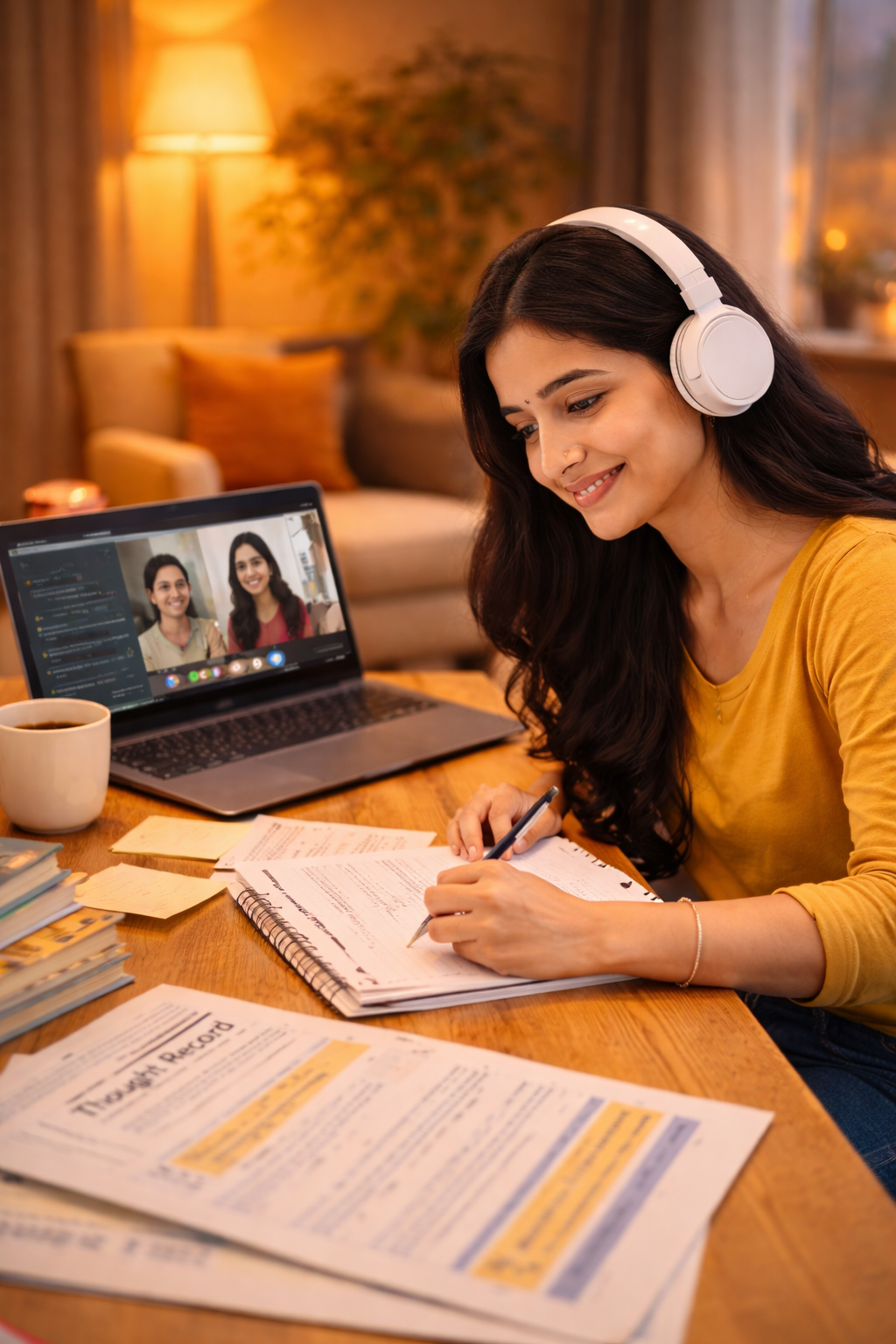
What could change with the right support?
Therapy isn't about never feeling anxious or stressed again. Life will still bring uncertainty and pressure. The goal is healthier ways to respond.
Less overthinking
Spend less time caught in repetitive worry.
Better emotional awareness
Recognise what you're feeling and understand your patterns.
Greater confidence
Approach situations anxiety used to make difficult.
Healthier coping
Practical strategies for stressful moments.
Better relationships
Communicate more openly and understand how anxiety affects your interactions.
More control over your day
Decide based on what matters to you, not on what anxiety tells you to avoid.
Whom should you consult for anxiety?
If anxiety is persistent, hard to manage or affecting your sleep, work or relationships, you can speak with a qualified mental health professional. You don't need to diagnose yourself first.
Psychologist or counsellor
Talk therapy to understand your anxiety and build skills to manage it. Most people start here. Sessions last 60 minutes.
Book individual therapyPsychiatrist
A medical doctor who can assess whether medication might help, especially if symptoms are severe or not improving. Consultations last 30–45 minutes.
Book a psychiatric consultationStill unsure? Read Psychiatrist, psychologist or counsellor: who should you book with?
Frequently asked questions about anxiety & stress therapy
Can't find your answer? Contact us.
What is anxiety counselling?
Anxiety counselling is professional psychological support for persistent worry, fear, overthinking, stress or panic. Your therapist helps you understand what you're experiencing and develop healthier ways to manage it, using evidence-based approaches such as CBT.
What's the difference between stress and anxiety?
Stress is usually a response to something specific, like a deadline, an exam or a conflict, and it eases when the pressure passes. Anxiety can continue even when there's no clear trigger, and it often involves worry about what might happen. The two often overlap, and counselling can help with both.
How do I know if I need anxiety counselling?
Consider professional support if worry or stress has lasted more than a few weeks, or if it's affecting your sleep, work, studies, relationships or ability to enjoy life. You don't need to diagnose yourself before speaking with a therapist.
Can counselling help with overthinking?
Yes. Counselling helps you understand repetitive thought patterns and what triggers them. Depending on your needs, your therapist may use CBT or mindfulness-based techniques to help you respond differently to recurring worries.
Can I have anxiety counselling online?
Yes. All Zenup sessions are online, on a one-on-one video call through Google Meet or Microsoft Teams. You can join from home or any private space with a stable internet connection, from anywhere in India or abroad.
Is online counselling as effective as in-person counselling?
Research suggests it is. A 2021 review of 57 studies in Clinical Psychology Review found that mental health care delivered by video produced results largely equivalent to in-person care, and a 2018 meta-analysis found therapist-guided online CBT worked about as well as face-to-face CBT. A good relationship with your therapist and a private space to talk matter most.
What happens during my first session?
Your first session is about understanding you: what you're experiencing, what may be contributing to it and what you hope to change. Your therapist takes a detailed history, and you can ask any questions you have about therapy.
How many sessions will I need?
There is no fixed number. It depends on your concerns, goals and progress. Many people start with weekly sessions and adjust over time. After a few sessions, your therapist will give you a clearer picture of what to expect.
How much does anxiety counselling cost?
Therapy fees depend on the therapist's experience, and there are options for different budgets. Individual sessions last 60 minutes. If you also need a psychiatric consultation, the first one costs ₹1,400 and follow-ups cost ₹1,200.
Is online counselling confidential?
Yes. Sessions are one-on-one and never recorded, and what you share stays between you and your care team. As with any licensed mental health service, information is only disclosed if there is a serious risk to your safety or someone else's, or if the law requires it. Your therapist can explain this in your first session.
Can counselling help with work stress?
Yes. Counselling can help you work through workplace pressure, performance anxiety, burnout, boundaries, difficult professional relationships and other sources of work-related stress.
Can anxiety affect sleep?
Yes. Anxiety and stress can make it hard to relax, fall asleep or quiet racing thoughts at night. Therapy can help with the worry behind it, and if sleep problems persist, a professional can help identify the right support.
Do I need medication for anxiety?
Not necessarily. Many people manage anxiety well with therapy alone. If your symptoms are severe or not improving, a psychiatrist can assess whether medication might help alongside therapy. Zenup psychiatrists offer 30–45 minute online consultations.
Whom should I consult for anxiety?
You can start with a qualified psychologist or counsellor for talk therapy. If your symptoms are severe, or you think medication may help, a psychiatrist is the right professional. You can book either on our booking page.
No questions match that search. Try another word.
You don't have to keep carrying it alone
Anxiety and stress may have become part of your everyday life, but they don't have to define it. Start with one conversation.
- Qualified psychologists
- Confidential, never recorded
- Online across India
In a crisis? Zenup is not an emergency service. Call Tele-MANAS 14416 (free, 24/7) or 112.
Additional resources for anxiety & stress support
Read
Self-care and coping
Related support
Online checklists don't replace an assessment by a qualified professional.
Urgent help
Free, 24/7 government mental health helpline. For immediate danger, go to your nearest hospital.
