 Skip to content
You’ve finally decided to get some support. Then you open a booking page and hit a wall of unfamiliar titles or online therapy sessions. Psychiatrist, psychologist, counsellor, therapist. They get used so loosely online that most people just click the first result instead of the right one.
That mix-up isn’t harmless. It can mean weeks spent with the wrong kind of support, or someone who actually needs medication never reaching a psychiatrist at all. Here’s what each professional really does, so your next step is a decision instead of a guess.
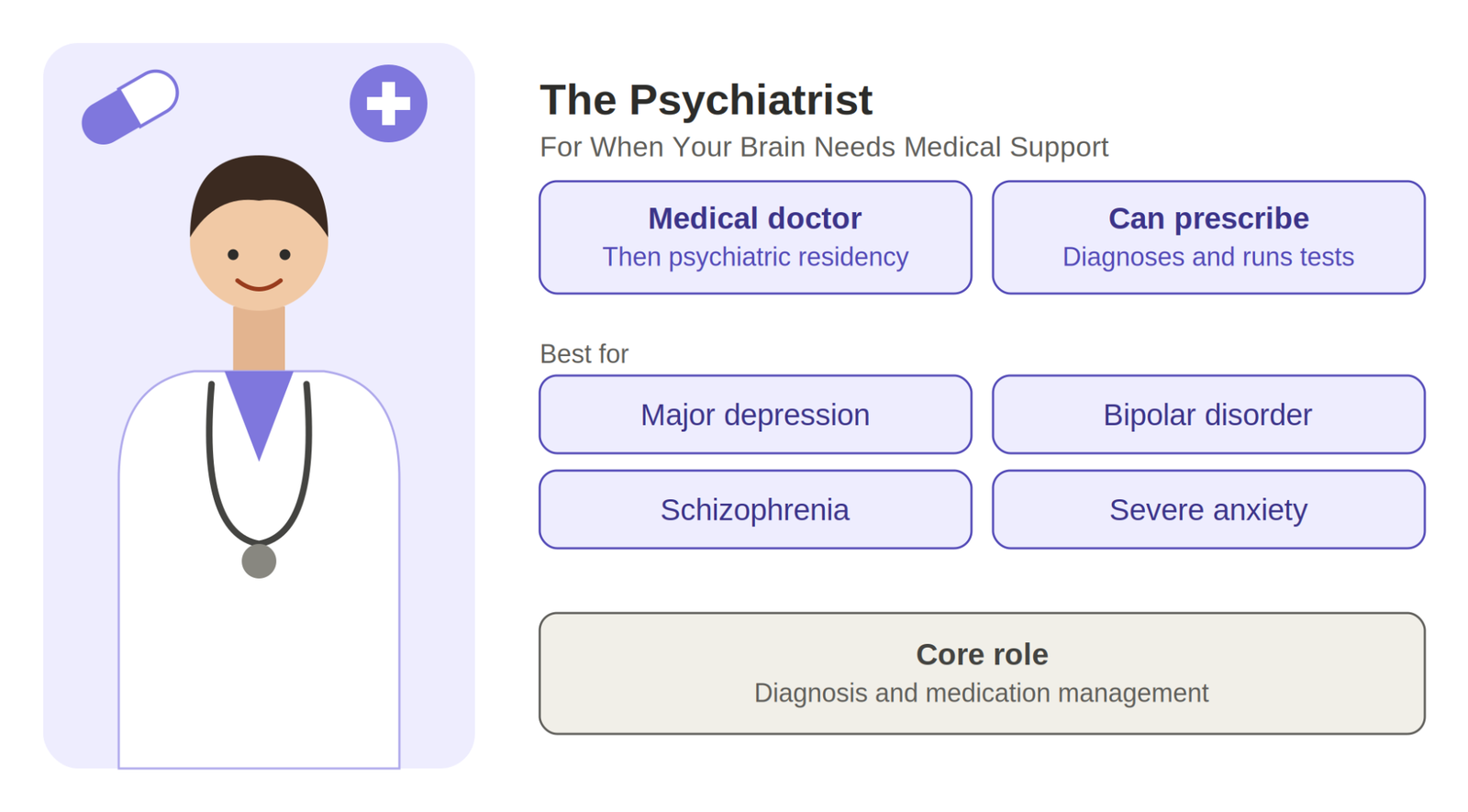
The Psychiatrist: For When Your Brain Needs Medical Support
A psychiatrist is a medical doctor first. They go through medical school, then train specifically in mental health, which means they can diagnose conditions, run tests, and prescribe medication.
This matters most when there’s a biological piece involved, something medication can actually help with. Think major depression, bipolar disorder, schizophrenia, or anxiety severe enough to interfere with daily life. A psychiatrist looks at your symptoms and asks whether there’s a chemical piece driving them, and whether treatment needs medication alongside talk therapy.
Some psychiatrists do offer talk therapy too. Their core role, though, is diagnosis and medication management for conditions that need more than conversation to shift.
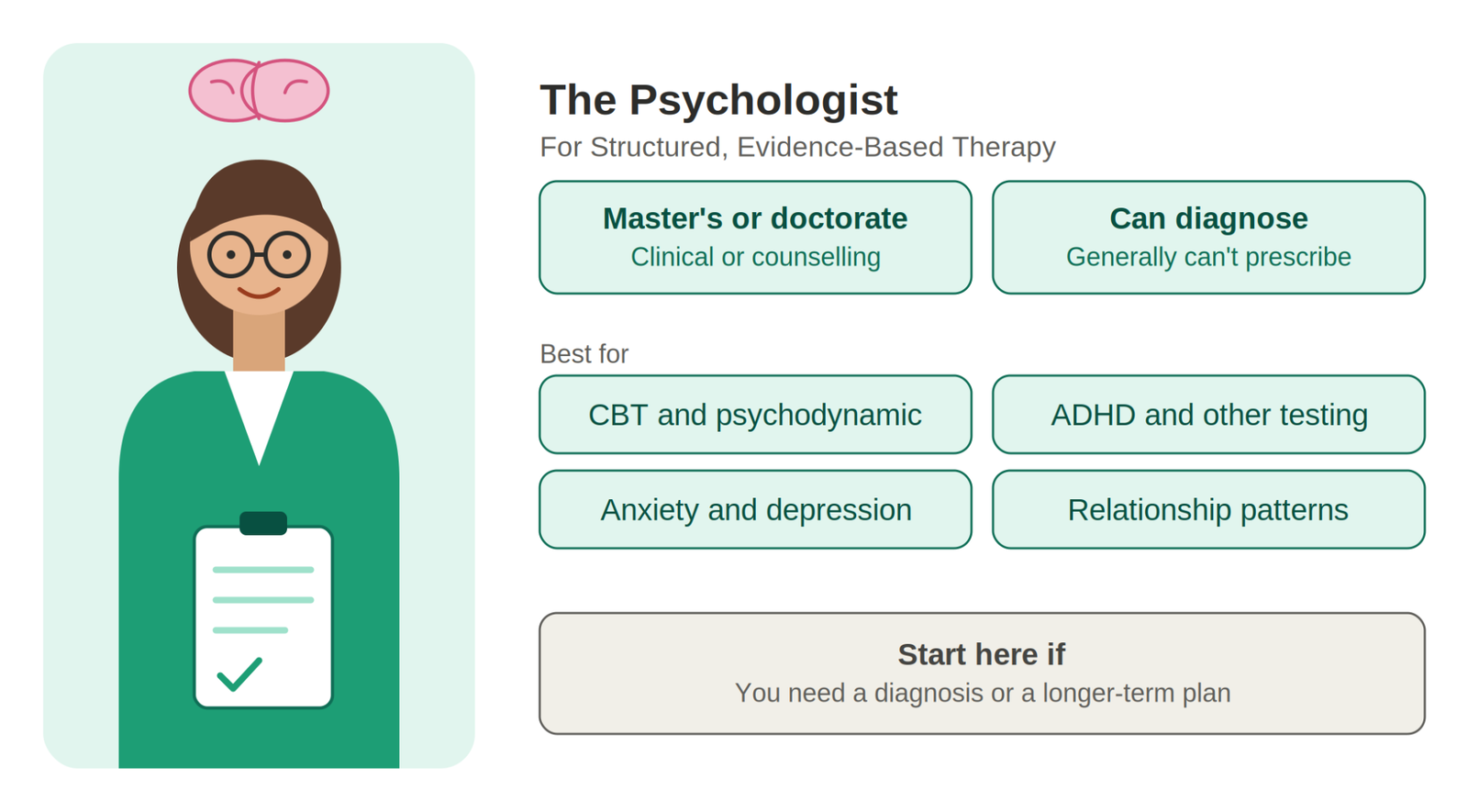
The Psychologist: For Structured, Evidence-Based Therapy
A psychologist usually holds a master’s or doctorate in clinical or counselling psychology. Unlike a psychiatrist, they’re not a medical doctor and generally can’t prescribe medication.
What they bring instead is structured therapy built on actual evidence. Cognitive behavioural therapy and psychodynamic therapy both fall under this. So does formal psychological testing, the kind used to properly diagnose things like ADHD, learning disorders, or personality disorders. This can be done through in-person sessions and psychological counselling online. If you need a formal diagnosis, or a longer-term plan for anxiety, depression, trauma, or patterns that keep repeating in your relationships, a psychologist is usually where you start.
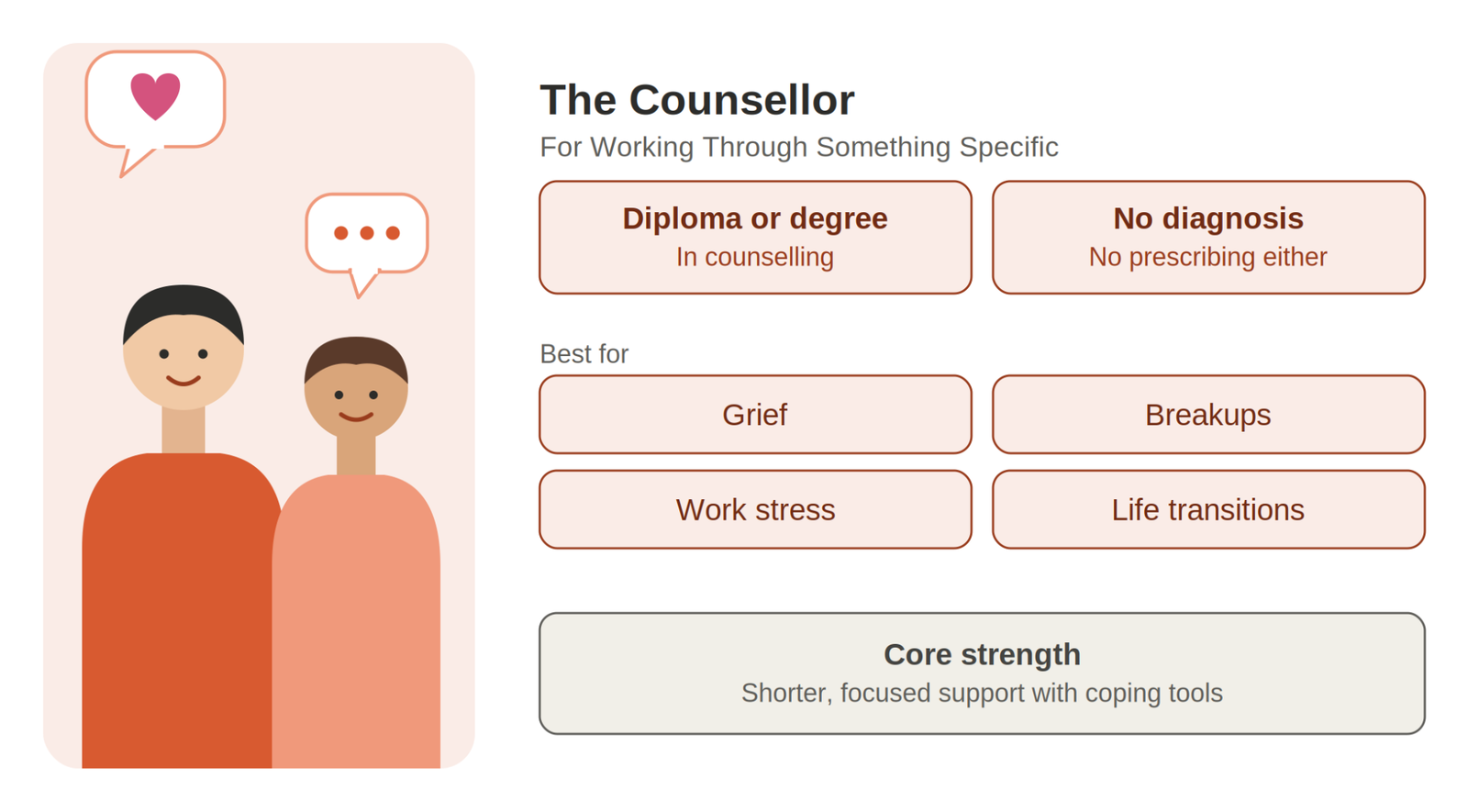
The Counsellor: For Working Through Something Specific
A counsellor typically holds a diploma or degree in counselling, with training built around supporting people through particular life moments. Grief, a breakup, work stress, a rough transition.
Counsellors generally don’t diagnose or prescribe. Their strength is shorter, focused support- someone to actually talk through a specific problem with, using practical coping strategies rather than clinical assessment. A lot of what gets marketed today as psychological counselling online falls right into this category: accessible support for something specific that doesn’t need a formal diagnosis to be worth talking about.
How They Actually Compare
Factor | Psychiatrist | Psychologist | Counsellor |
Can prescribe medication | Yes | No | No |
Can formally diagnose | Yes | Yes | Generally no |
Typical training | Medical degree + psychiatric residency | Master’s or doctorate in psychology | Diploma or degree in counselling |
Best suited for | Severe or complex conditions, medication needs | Structured therapy, assessments, longer-term treatment | Specific life challenges, shorter-term support |
Session focus | Diagnosis and medical treatment | Evidence-based therapy techniques | Guided conversation and coping strategies |
So, Who Do You Actually See First?
A few honest questions usually point you the right way:
- Are your symptoms severe, sudden, or making it hard to function day to day? Start with a psychiatrist, especially if there’s any safety concern involved.
- Do you suspect something that needs formal testing, like ADHD or a learning disorder? That’s a psychologist’s job.
- Are you dealing with something specific and identifiable, a breakup, grief, burnout at work? A counsellor is often the right fit, and psychological counselling online tends to be the fastest of the three to access.
Still not sure? Most platforms offering online therapy sessions now include a short intake step that matches you to the right professional before you even book.
It’s also completely normal to see more than one of these people over time, sometimes even at the same time. A psychiatrist managing medication and a psychologist running therapy often work on the same case together.
Getting Started Doesn’t Have to Take Weeks
One of the biggest shifts lately is how much easier it’s become to actually start. You don’t need a provider within driving distance anymore, and you don’t need to wait weeks for a first slot either.
Zenup Health was built around exactly this problem, matching you with the right kind of professional based on what you’re actually dealing with, instead of leaving that decision to guesswork. Every session runs online, so location and travel time stop being the thing that holds you back.
Conclusion
It depends entirely on what you’re dealing with, how severe it is, and what kind of support actually helps you move forward. What matters more is not letting the confusion be the reason you wait.
Zenup Health was built to take that guesswork off your plate, connecting you with the right licensed professional through online therapy sessions built around your actual situation. If you’re ready to talk to someone, visit zenuphealth.com and get matched with the right fit to start.
