 Skip to content
Certainly, stress is an omnipresent experience cutting across demographics and backgrounds, affecting individuals on multiple levels. The triggers for stress are diverse, stemming from various facets of life, including work dynamics, relationships, financial challenges, and health concerns. Recent studies indicate a substantial impact, with approximately 33% of individuals encountering extreme stress, while a staggering 77% report that stress significantly affects their physical health. Furthermore, a significant 73% note the profound impact of stress on their mental health.
Stress isn’t just a passing emotion. It seeps into mental and even physical health, often ending up as high blood pressure or other afflictions that include anxiety disorders and depression burnout. The insidious nature of stress is that it can take on many different forms, involved in both a psychological and physiological sphere. Access to appropriate mental health services can help individuals understand the causes of stress, manage its effects, and develop healthier ways to cope with ongoing challenges.
Causes
Stress is now a common concern in India, and studies suggest that nearly one out of every four people suffer from it. The increasing problem has a lot of sources, including financial insecurity, on-the-job pressures and health problems as well as family disputes. The heavy influence of the COVID-19 pandemic has increased levels of stress. Among those who identify themselves as stressed, 28 % point to fear and uncertainty about health issues, while another 27 % say economic instability is what concerns them most.
It’s crucial to recognize that stress isn’t solely triggered by external factors; internal elements also contribute significantly. Internal stressors, such as fear, uncertainty, and negative attitudes, play a pivotal role in amplifying stress levels. For instance, apprehension about circumstances beyond our control can significantly contribute to heightened stress.
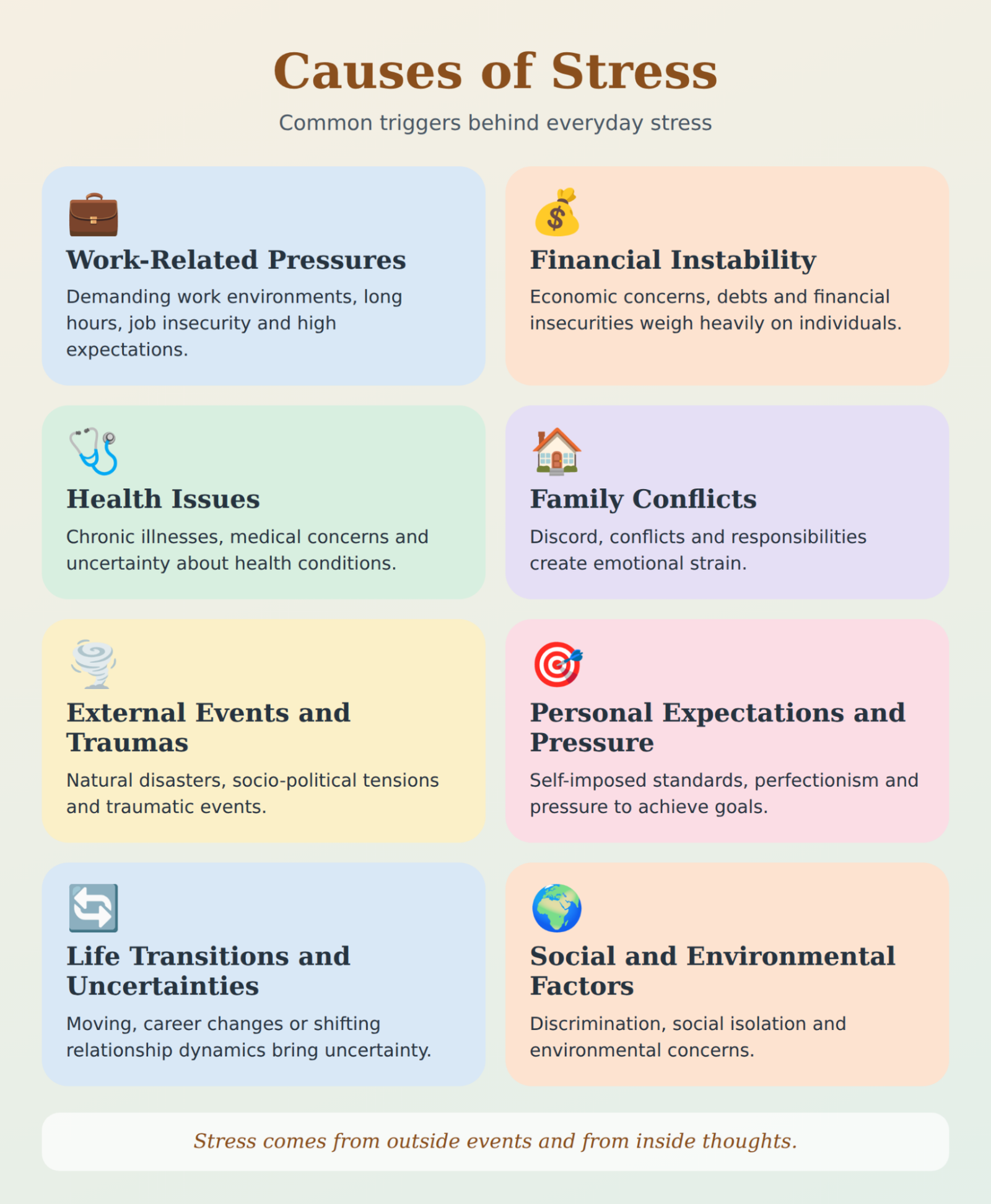
Causes of Stress can be attributed mainly to the following factors:
- Work-Related Pressures: Demanding work environments, long hours, job insecurity, and high expectations can all contribute to stress.
- Financial Instability: Economic concerns, debts, and financial insecurities often weigh heavily on individuals, leading to significant stress levels.
- Health Issues: Chronic illnesses, medical concerns, and uncertainties about health conditions can profoundly impact stress levels.
- Family Conflicts: Discord within familial relationships, conflicts, and responsibilities can create emotional strain, contributing to stress.
- External Events and Traumas: Natural disasters, socio-political tensions, and traumatic events can induce stress responses in individuals.
- Personal Expectations and Pressure: Self-imposed standards, perfectionism, and the pressure to achieve certain goals can lead to internal stress.
- Life Transitions and Uncertainties: Major life changes, such as moving, career changes, or relationship dynamics, can evoke stress due to uncertainties.
- Social and Environmental Factors: Issues like discrimination, social isolation, or environmental concerns can also contribute to stress.
Effects
The impact of stress upon one’s body and mind can be tremendous. Looking at sources today, 24 % of Indians suffer from stress. Stress can lead to a host of physical health problems, including obesity, heart disease and stroke. Furthermore, it can damage the immune system so that people are more susceptible to diseases and infections. Knee discomfort, backaches and headaches are also caused by stress. Stress has been identified by gynecologists as the culprit behind women’s irregular menstrual cycles and low fertility among couples. Stress can also affect mental health. According to current studies, 73 % of people feel that stress affects their psychological health. Examples include anxiety, depression and burnout. A survey of 385 professionals in India shows that one-third are dealing with deteriorating mental health, another third have lost interest in their work and the rest lack connection to existence.
Elaborating on Mental Health Effects of Stress:
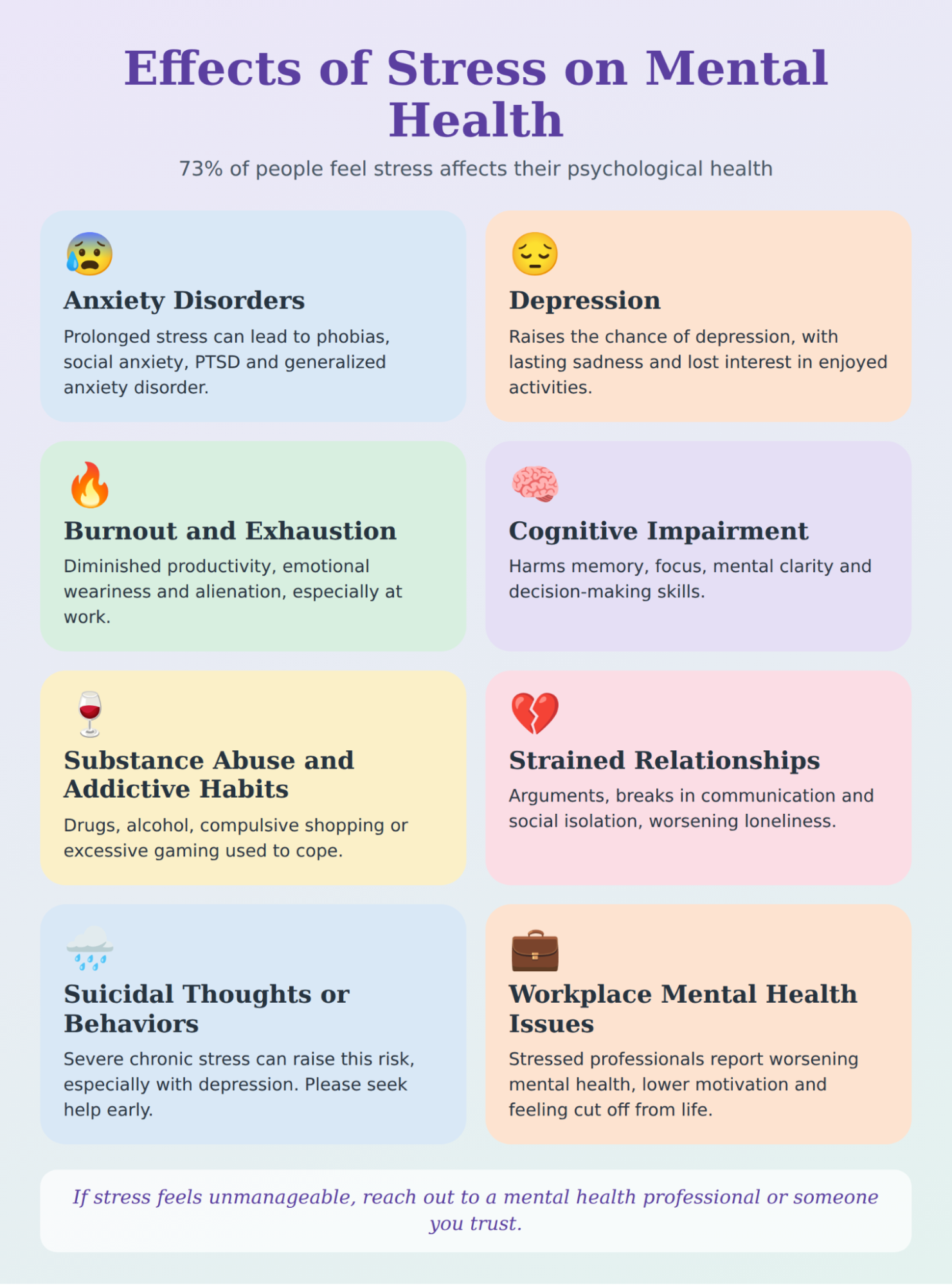
- Anxiety Disorders: Stress can contribute to emotions of concern, unease, and panic and is frequently a prelude to anxiety disorders. Prolonged stress exposure can lead to phobias, social anxiety, post-traumatic stress disorder (PTSD), and generalized anxiety disorder (GAD). Online therapy for anxiety can provide individuals with access to professional mental health support and help them develop strategies to manage anxiety-related concerns.
- Depression: Prolonged stress can greatly raise one’s chance of becoming depressed. It interferes with the control of mood, resulting in enduring melancholy and pessimism as well as a lack of interest in once-enjoyed activities.
- Burnout and Exhaustion: Prolonged and excessive stress can cause burnout, which is typified by diminished productivity, emotional weariness, and alienation, particularly in work-related environments.
- Cognitive Impairment: Stress has an adverse effect on memory, focus, mental clarity, and decision-making skills. This may make it more difficult to accomplish everyday duties, professional obligations, and academic goals.
- Substance Abuse and Addictive habits: As coping techniques for stress relief, people frequently abuse drugs or alcohol or engage in compulsive shopping or excessive gaming. These habits can exacerbate pre-existing mental health issues.
- Stress can cause interpersonal connections to become strained, which can result in arguments, breaks in communication, and a feeling of social isolation. This worsens loneliness and has further negative effects on mental health.
- Suicidal thoughts or behaviors: Severe chronic stress can raise the risk of suicide thoughts or behaviors, particularly when it’s combined with mental health conditions like depression.
- Workplace Mental Health Issues: Stress-stricken professionals frequently report deteriorating mental health, a decrease in motivation for their careers, and a feeling of being cut off from their life.
Stress Management and Treatment
Many lives are impacted by stress, which frequently has a disastrous effect on both physical and mental health. It’s not insurmountable, though. There are tried-and-true methods that can change the way we approach it.
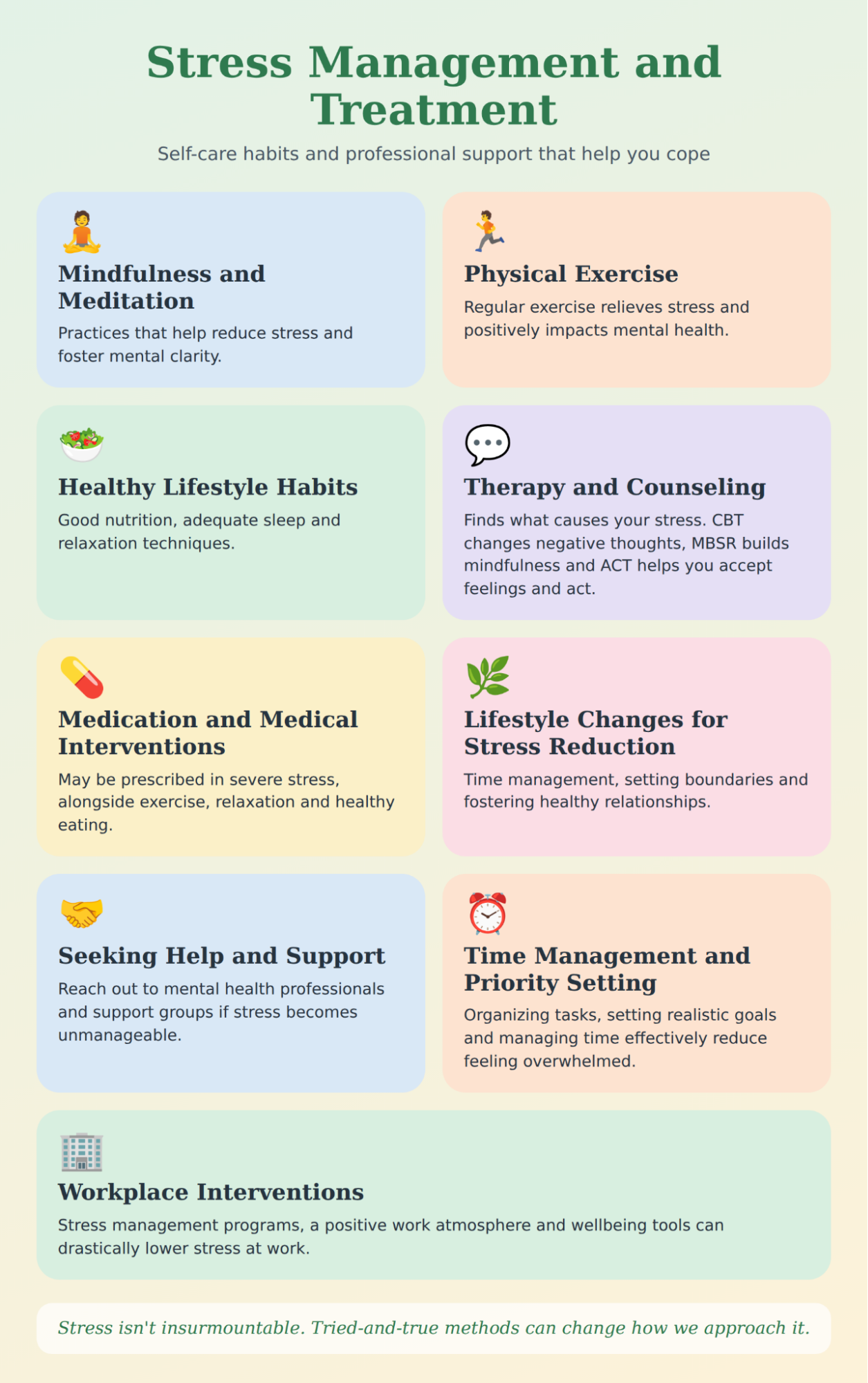
- Mindfulness and Meditation: Dive into the world of mindfulness practices and meditation techniques that help in reducing stress and fostering mental clarity.
- Physical Exercise: Discover the stress-relieving benefits of regular exercise and how it positively impacts mental health.
- Healthy Lifestyle Habits: Explore the importance of nutrition, adequate sleep, and relaxation techniques in managing stress levels effectively.
Professional Treatment and Management:
- Therapy and Counseling: Therapy is useful in determining what causes your stress and developing coping mechanisms to help manage it. Stress can be handled through various approaches such as mindfulness-based stress reduction (MBSR), acceptance and commitment therapy (ACT), cognitive-behavioral therapy (CBT) among others. The basic goal of cognitive behavioral therapy (CBT) is to modify negative thoughts and behaviors that promote stress. MBSR as a kind of treatment makes you more mindful of your thoughts and feelings using mindfulness practices. With ACT, you are able to embrace your thoughts, feelings, and take positive steps towards improving your life.
- Medication and Medical Interventions: In some cases, medication can be prescribed during severe stress situations but should be used alongside other ways of managing stress such as exercise, relaxation techniques and eating healthy.
Lifestyle Changes for Stress Reduction: Discuss practical lifestyle changes like time management, setting boundaries, and fostering healthy relationships that significantly reduce stress levels.
Seeking Help and Support: Encourage readers to seek professional help if stress becomes unmanageable. Highlight the importance of reaching out to mental health professionals and support groups for guidance and support.
Time Management and Priority Setting: Organizing tasks, setting realistic goals, and managing time effectively can reduce feelings of being overwhelmed, significantly impacting stress related to work or personal life.
Workplace Interventions: You can drastically lower stress levels at work by putting stress management programs into place, fostering a positive work atmosphere, and providing tools for employees’ well-being.
FAQs
1. What are the common causes of stress?
Work pressure, financial concerns, health problems, family conflicts, relationship difficulties, major life changes, and personal expectations can all cause stress. Fear, uncertainty, and negative thinking can also increase stress levels.
2. How does stress affect mental health?
Stress can affect your mood, concentration, sleep, and ability to manage everyday responsibilities. Prolonged stress can contribute to anxiety, low mood, emotional exhaustion, and burnout, particularly when you do not get enough time or support to recover.
3. How can I manage stress effectively?
You can manage stress by exercising regularly, getting adequate sleep, eating a balanced diet, practising mindfulness or meditation, managing your time, setting healthy boundaries, and maintaining supportive relationships. If stress starts affecting your daily life, stress management and counselling can help you develop practical coping strategies.
4. When should I seek counselling for stress and anxiety?
Consider counselling for stress and anxiety when persistent stress or anxiety affects your sleep, work, relationships, concentration, or everyday activities. A qualified mental health professional can help you understand your concerns and develop healthier ways to cope.
5. Whom should I consult for anxiety?
If anxiety regularly affects your thoughts, emotions, relationships, or daily activities, consider speaking with a qualified psychologist, counsellor, or psychiatrist. A mental health professional can help you understand your concerns and identify suitable support, including online therapy for anxiety when appropriate.
6. Can online therapy help with stress and anxiety?
Yes. Online therapy sessions can help you speak with a qualified mental health professional from a convenient location. Through psychological counselling online, you can explore stressors, understand unhelpful thought patterns, and develop strategies to manage difficult emotions and situations.
Understanding and adopting these diverse stress management and treatment strategies can empower individuals to take charge of their mental and emotional health. By incorporating these techniques into daily routines and seeking appropriate professional help when needed, individuals can effectively navigate stressors and foster resilience. For those looking for professional mental health support, Zenup Health offers counselling and therapy services designed to help individuals better understand and manage their emotional well-being.
