 Skip to content
In today’s fast-paced world, burnout has emerged as a pressing concern impacting mental well-being. It’s more than just feeling stressed or tired every day. Burnout is deep. It’s emotional. It’s physical. It exhausts the mind due to long periods of serious stress. It’s not just feeling worn out after a busy day. It’s a tiring feeling that spreads through all parts of life, taking away excitement, strength, and direction.
We must understand burnout, including its signs and the way it relates to mental health. It pulls down our drive and pleasure, causing feelings of being apart from work or personal relationships. Moreover, it brings several emotions into play, from anger and distrust to feeling unproductive, all of which are harmful to mental health.
As we delve into understanding burnout, it’s crucial to grasp its root causes, its subtle signs, and the significant impact it has on our mental health.
Causes
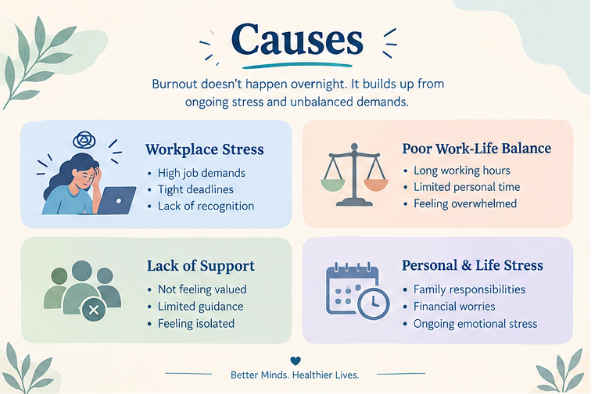
A stress-induced phenomenon, burnout affects physical and psychological wellbeing. Workplace stress encompasses three major factors that lead to burnout, such as high job demands, tight deadlines and lack of recognition for efforts. Studies carried out by the American Institute of Stress indicate that about 40 % of workers find their job extremely stressful. For organizations, workplace wellness programs can help create healthier working environments and support employee mental well-being.
Work-life balance is off-kilter, sparking big concerns. Studies from Harvard Business School show that over 94% of workers put in more than 50 hours a week. It shines a light on the pull on personal time and its connection to feeling overwhelmed. Also, not feeling appreciated or supported fuels this harmful situation. Research in the Journal of Applied Psychology shows people who feel unimportant are more likely to feel burnt out.
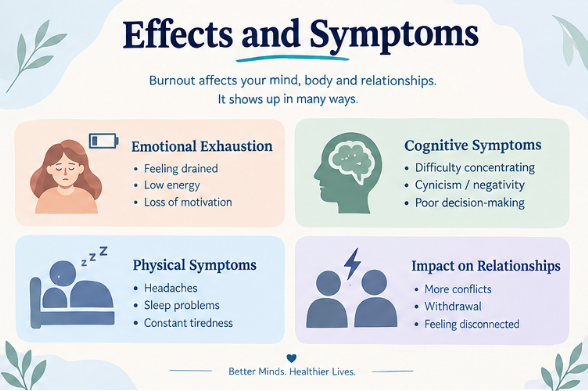
Burnout has a significant negative influence on mental health and wellbeing and frequently presents with a range of symptoms and consequences. One of the main symptoms is emotional exhaustion, which is characterized by a chronic sense of being drained, overwhelmed, and low on energy. This frequently comes with lower performance and productivity, which affects one’s capacity to work or pursue personal goals at their best.
Cognitive symptoms also surface, influencing decision-making and general cognitive capacities. These symptoms include cynicism, diminished focus, and persistent negativity. One’s quality of life is further lowered when these feelings combine with bodily indications like headaches, sleep difficulties, and persistent weariness. When sleep problems continue, therapy for sleep disorders may help address the underlying psychological factors affecting sleep.
Furthermore, burnout has a major impact on interpersonal relationships by raising the likelihood of disagreements, retreat, or social disengagement. Studies indicate that more than 60% of people who are going through burnout say their relationships are suffering as a result.
Comprehending these indications and consequences is essential for prompt remediation.
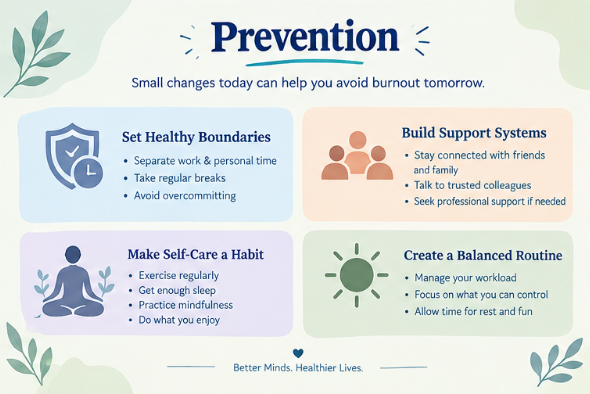
Finding support systems is essential for preventing burnout. Having social interactions with friends, coworkers, or licensed therapists reduces stress in a big way. Research published recently in the Journal of Occupational Health Psychology confirms that social support at work significantly lowers the risks of burnout.
Adopting self-care routines is essential. The American Psychological Association states that engaging in regular physical activity can lower stress symptoms by as much as 30%. Practicing mindfulness, engaging in hobbies, or going outside can all act as powerful barriers against burnout.
Management and treatment
An all-encompassing strategy founded in research-proven methods is necessary for the effective management and treatment of burnout. Identifying and admitting burnout is the first step. For prompt intervention, it is essential to comprehend its symptoms, which include chronic weariness, diminished performance, and emotional depletion.
Getting help from an expert is essential for managing burnout. According to studies, people who seek treatment report a major, more than 50% reduction in their symptoms of burnout. Burnout can be effectively managed with the use of therapeutic methods like mindfulness-based stress reduction or cognitive-behavioral therapy.
Making self-care a priority is the cornerstone of treating burnout. Recuperation is facilitated by partaking in rejuvenating activities for the body and mind, such as regular exercise, enough sleep, and relaxation training. The negative impacts of burnout are considerably reduced when self-care practices are included, according to recent research published in the Journal of Occupational and Environmental Medicine.
FAQs
1. What is burnout?
Burnout is a state of physical, emotional, and mental exhaustion caused by prolonged or excessive stress. It can affect motivation, productivity, relationships, and overall well-being.
2. What are the common signs of burnout?
Common signs of burnout include emotional exhaustion, persistent tiredness, difficulty concentrating, cynicism or negativity, reduced productivity, sleep problems, headaches, and withdrawal from social interactions.
3. What causes burnout?
Burnout can result from prolonged workplace stress, excessive workloads, tight deadlines, lack of recognition or support, poor work-life balance, and ongoing emotional or personal stress.
4. How can burnout be prevented?
Burnout can be reduced by setting healthy boundaries, taking regular breaks, maintaining a healthy work-life balance, exercising, getting adequate sleep, practicing mindfulness, and seeking support when needed.
5. When should I seek professional help for burnout?
Consider seeking professional help when burnout symptoms persist, interfere with work or relationships, affect daily functioning, or become difficult to manage on your own. A mental health professional can help identify underlying concerns and develop appropriate coping strategies.
Conclusion
Maintaining mental health in the maze of contemporary demands requires recognizing, assessing, and treating burnout. Burnout is more than just tiredness; it’s a multifaceted interaction of physical, mental, and emotional stresses that affect all aspects of life. The first step to taking back control is recognizing the warning signs, which can range from diminished productivity and damaged relationships to emotional exhaustion.
Equipped with empirically supported perspectives and useful tactics, we can successfully tackle burnout. If burnout is affecting your work, relationships, or everyday life, online therapy India can make it easier to connect with a mental health professional and receive appropriate support. Resilience against burnout’s widespread impacts is based on setting limits, getting support, emphasizing self-care, and getting expert advice. Recall that admitting to burnout is a show of strength and self-care rather than weakness.
