 Skip to content
Life can get really busy, and at times we forget to take care of the most important person – ourselves. That’s the role that self-care plays! Practicing self-care is similar to giving yourself a warm hug. It all comes down to doing things that improve your inner and outside well-being. Envision taking a break when you’re worn out, engaging in cheerful hobbies, or just spending time doing things that make you happy. Being your own best friend, or taking care of yourself, is what self-care is all about. It’s a means of ensuring your happiness and overall well-being, both physically and psychologically, rather than merely a reward. Therefore, practicing self-care is your secret weapon for feeling confident in your own skin, whether that means taking deep breaths when things become rough, having a good night’s sleep, or engaging in a favourite pastime.
We will discuss the definition of self-care, its importance for our internal well-being, and some simple self-care activities in this blog.
Why is self-care important?
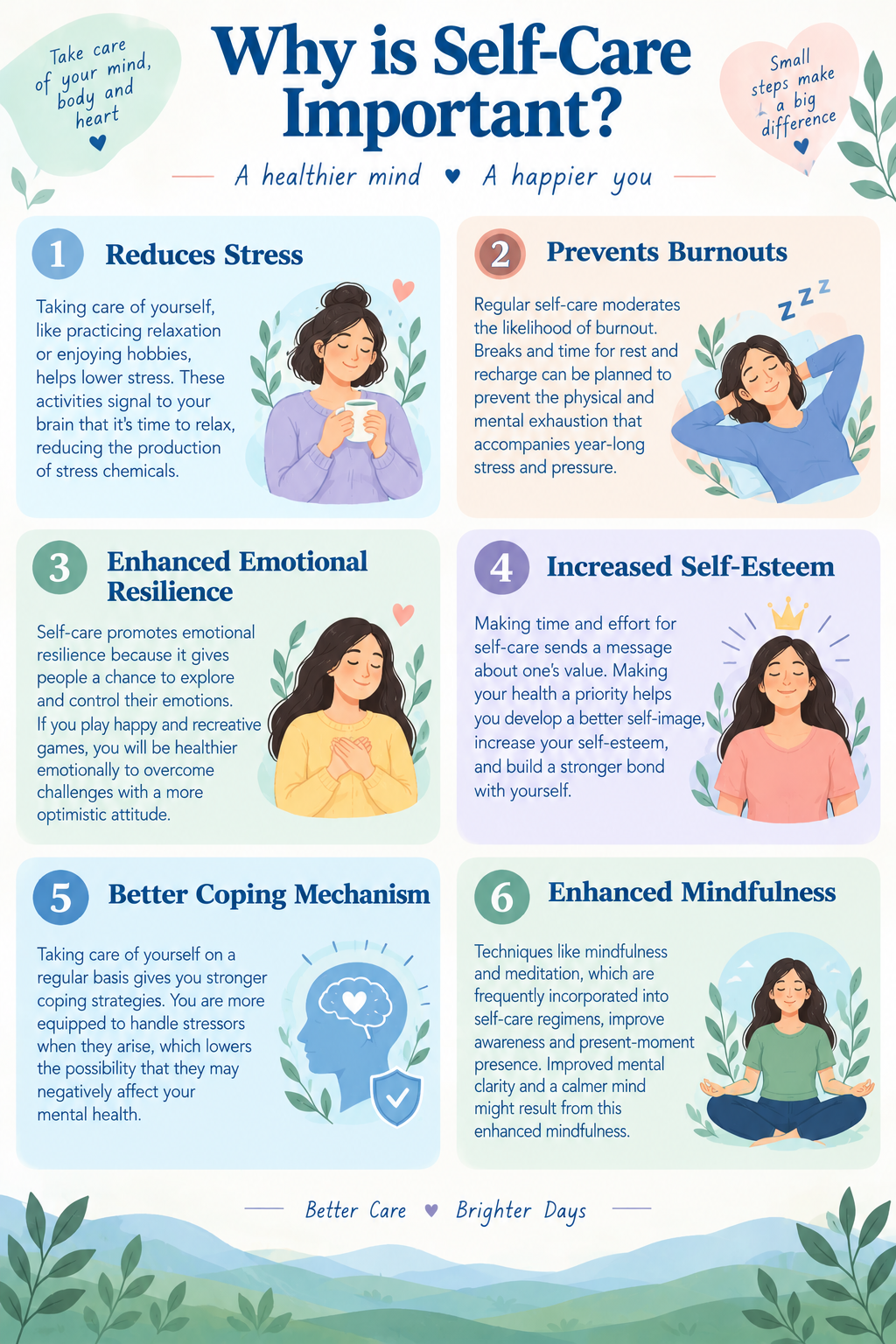
- Reduces stress: Taking care of yourself, like practicing relaxation or enjoying hobbies, helps lower stress. These activities signal to your brain that it’s time to relax, reducing the production of stress chemicals.
- Prevents burnouts: Regular self-care moderates the likelihood of burnout. Breaks and time for rest and recharge can be planned to prevent the physical and mental exhaustion that accompanies year-long stress and pressure.
- Enhanced Emotional Resilience: Self-care promotes emotional resilience because it gives people a chance to explore and control their emotions. If you play happy and recreative games, you will be healthier emotionally to overcome any challenges with a more optimistic attitude.
- Increased Self-Esteem: Making time and effort for self-care sends a message about one’s value. Making your health a priority helps you develop a better self-image, increase your self-esteem, and build a stronger bond with yourself.
- Better coping mechanism: Taking care of yourself on a regular basis gives you stronger coping strategies. You are more equipped to handle stressors when they arise, which lowers the possibility that they may negatively affect your mental health.
- Enhanced Mindfulness: Techniques like mindfulness and meditation, which are frequently incorporated into self-care regimens, improve awareness and present-moment presence. Improved mental clarity and a calmer mind might result from this enhanced mindfulness.
Practicing self-care involves intentionally taking actions to prioritize and nurture your physical, emotional, and mental well-being. Here are various ways you can practice self-care:
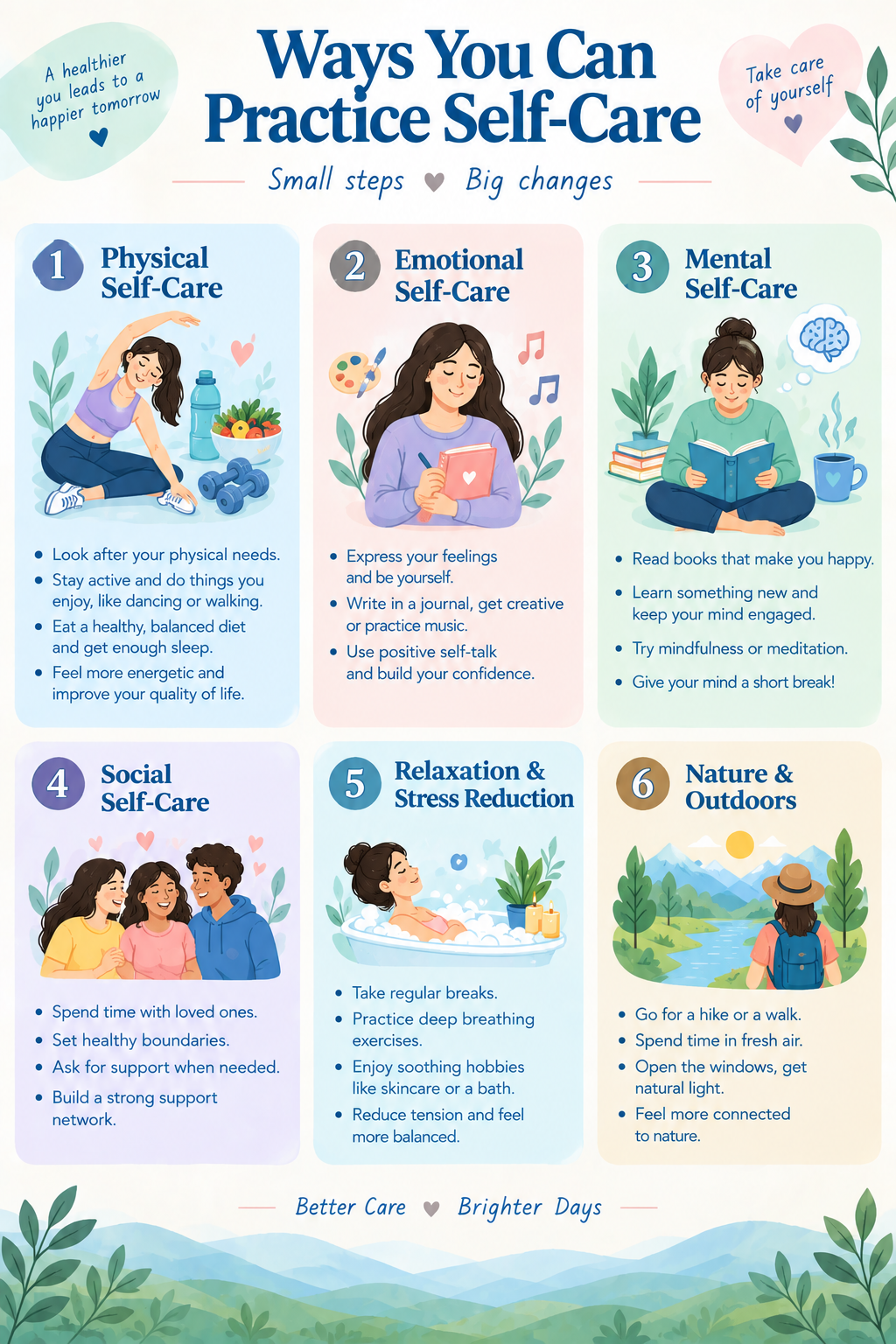
- Physical Self-Care: It’s vital to look after your physical needs. To keep active, do things you enjoy doing, like dancing or walking. A healthy, well-balanced diet and adequate sleep are essential. Your body will feel powerful and energized after following these easy instructions, which will improve your quality of life!
- Emotional Self-Care: This type of self-care involves self-expression. To increase your confidence, write in a notebook, express yourself artistically or musically, and practice saying encouraging things.
- Mental Self-Care: It’s really beneficial for you to look after your mental health. Make time to read books that make you happy, study new things to keep your mind engaged, and engage in relaxing activities like mindfulness or meditation. It’s like to taking a brief vacation for your head!
- Social Self-Care: Getting together with loved ones is a wonderful way to take care of yourself. To maintain equilibrium, learn when to say “no” and establish boundaries. When you need support, don’t be afraid to ask friends, family, or experts for it. It’s similar to surrounding yourself with a solid support network!
- Relaxation and Stress Reduction: Give yourself a break from work during breaks to rest, take deep breaths to reduce tension, and indulge in soothing hobbies like skincare or a bath. It is very beneficial!
- Nature and the Outdoors: Spending time outdoors, such as on a hike or a stroll in a park, fosters a connection with the natural world. For a mental lift, open the windows, go outside, and breathe in the fresh air. It’s like giving your mind a breath of fresh air!
Frequently Asked Questions About Self-Care
- What is self-care?
Self-care means intentionally taking care of your physical, emotional, mental, and social well-being through healthy and supportive daily activities.
- Why is self-care important?
Self-care can help reduce stress, prevent burnout, improve emotional resilience, support self-esteem, and strengthen your ability to cope with everyday challenges.
- What are some simple self-care activities?
Simple self-care activities include getting enough sleep, taking a walk, practicing mindfulness, spending time with loved ones, enjoying hobbies, journaling, and taking regular breaks.
- How does self-care reduce stress?
Activities such as relaxation, deep breathing, mindfulness, exercise, and hobbies can help you relax and manage everyday stress more effectively.
- What are the different types of self-care?
The main types include physical, emotional, mental, and social self-care. Relaxation, spending time in nature, and stress-reduction activities can also be part of a self-care routine.
- Can self-care help prevent burnout?
Yes. Regular breaks, adequate rest, healthy routines, and activities that help you recharge can support stress management and reduce the risk of burnout.
- How can I make self-care a daily habit?
Start small by setting aside a few minutes each day for an activity that supports your well-being, such as walking, journaling, meditation, reading, or spending time with people you care about.
Conclusion
In conclusion, when life gets busy, it’s easy to forget to take care of ourselves. But self-care, which is like to giving ourselves a warm hug, may help with that. It’s not simply a reward; it’s a commitment to maintaining the happiness and health of our bodies and brains. Since self-care reduces stress, prevents burnout, and strengthens emotions, it is crucial for preserving our mental health. Thus, we are practicing self-care when we put our health first by doing things that enhance our mental, emotional, or physical well-being. Let’s make self-care a daily habit for a more enjoyable and peaceful journey!
