Why Do I Struggle to Sleep Without My Phone?
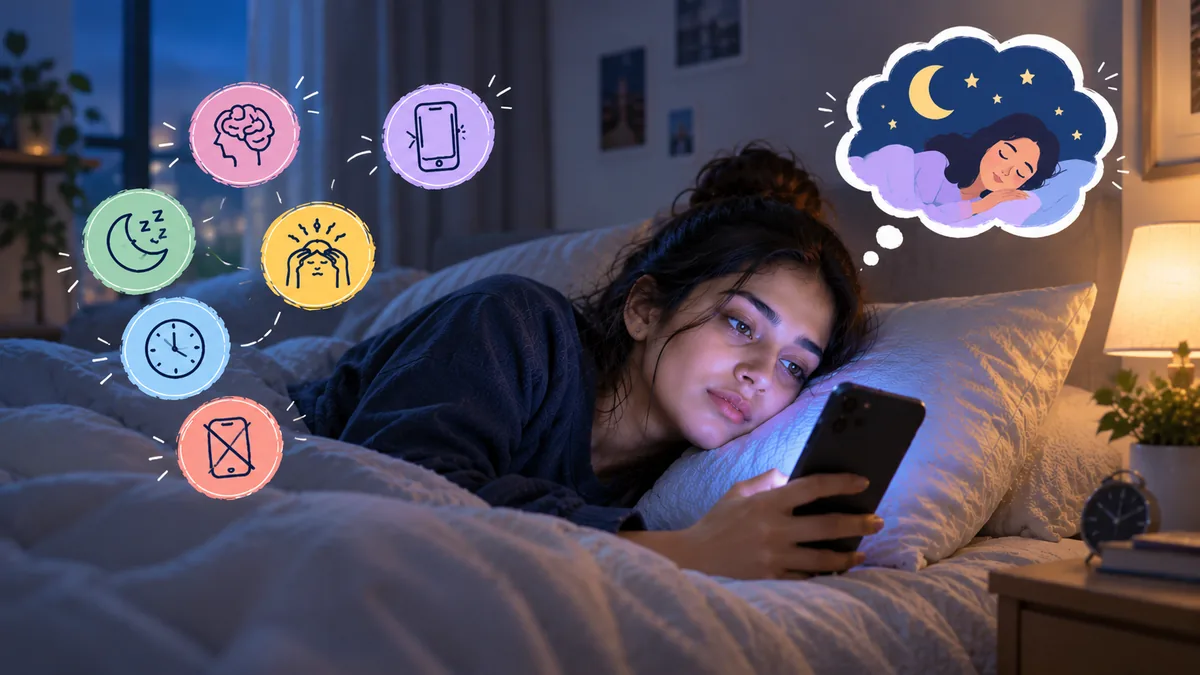
You put the phone on the charger across the room. Lights off, eyes closed, finally ready for sleep. Ten minutes later, your hand is reaching toward the nightstand anyway, and the room feels strangely loud without that familiar glow. Sound familiar?
That restless, slightly anxious feeling isn’t a character flaw. It also doesn’t mean you’re addicted in some dramatic way. Your brain is doing exactly what you trained it to do.
Your Phone Became Part of the Bedtime Routine
Brains love patterns. Every night you scroll, watch, or text before sleep, your brain files that sequence under “this is how the day ends.” Over weeks and months, the phone stops being a bonus and turns into a cue. Remove the cue, and your mind has no idea what comes next.
Think about making coffee every morning. Skip it one day, and something feels off before you even work out why. Same mechanism, different habits. It’s also why a fancier screen-time app rarely fixes anything alone. The routine itself needs rebuilding.
The Quiet Is the Real Problem
Here’s the part most people miss. The phone often isn’t keeping you awake. It’s keeping you company. When the screen goes dark, every thought you pushed aside during the day shows up at once. The awkward text you sent, the deadline on Thursday, the comparison you made while scrolling at 6 pm.
A phone fills that gap in half a second. Silence doesn’t. People who grew up with a screen in hand rarely practiced sitting alone in a quiet room, so the discomfort you feel without it is often your own unprocessed thoughts, finally getting airtime.
What the Screen Does to Your Body Clock
There’s a physical side too. Bright light in the evening, especially the blue-heavy kind from screens, can delay the release of melatonin, the hormone that tells your body it’s time to wind down. Content matters as well. A tense group chat or an endless feed keeps the brain alert right when it should be slowing down.
So the loop builds. The phone keeps you up late, and one bad night’s sleep leaves you foggy and stressed the next day. Then you lean on the phone harder at night to cope. Late-night scrolling also feeds comparison and FOMO, which quietly raises stress when your body needs to power down.
Signs It Has Gone Beyond a Bad Habit
Plenty of people take a while to fall asleep now and then. It deserves more attention when it keeps happening.
Watch for these patterns:
Lying awake for 30 minutes or more on most nights.
Feeling panicky or irritable when your phone is out of reach.
Waking at 3 am and checking it automatically.
Feeling exhausted during the day despite enough hours in bed.
Dreading bedtime because you expect another bad night.
If several of these sound familiar and last for weeks, the problem has probably grown past screen time alone. At that point, therapy for sleep disorders can help in ways that moving a charger across the room can’t.
Small Changes That Actually Help
Before anything formal, a few gentle shifts are worth testing. None of them need a dramatic phone detox.
Try these for a start:
Set a wind-down time 30 to 45 minutes before bed and keep it consistent.
Charge the phone across the room, but keep a paper book or a calm playlist within reach.
Switch on night mode and lower the brightness in the evening.
Write tomorrow’s to-do list before lights out so your mind stops rehearsing it.
Swap the last scroll for something slower, like stretching or a podcast with a sleep timer.
Give any change a week or two. Habits take time to rewire, and the first few nights often feel worse before they feel better. Missing a night doesn’t ruin the experiment.
What Therapy for Sleep Disorders Actually Looks Like
Many people picture therapy as lying on a couch and talking about childhood. Sleep-focused work looks far more practical. A therapist maps your sleep patterns, works out which thoughts and habits keep the cycle going, and builds a plan around them. Cognitive behavioural therapy for insomnia, often shortened to CBT-I, is among the most researched approaches. It targets the racing thoughts at bedtime, the worry about not sleeping, and the routines that quietly sabotage rest.
Sessions can also dig into what the phone is covering for. Loneliness, stress, burnout, and overthinking often sit underneath the late-night scrolling. Treating that root makes the sleep side easier. And if a doctor’s input would help, a psychiatrist can assess whether something more is going on.
Sleep trouble with a phone attached isn’t a willpower test you’re failing. It’s a pattern, and patterns can change with the right support.
Conclusion
Struggling to sleep without your phone is common, and it says more about habit and unprocessed stress than about weakness. Start with small changes and give them time. If bad nights keep stacking up, reaching out for help is a smart move, not an overreaction.
At Zenup Health, our RCI-licensed therapists and psychiatrists offer confidential online therapy sessions across India, including therapy for sleep disorders and support for the stress, anxiety, and overthinking that often feed it. Book a session at zenuphealth.com or call +91 7208 23 5555, and we’ll match you with someone who fits what you’re dealing with.