 Skip to content
Is Seeing a Psychiatrist Only for Severe Mental Health Conditions?
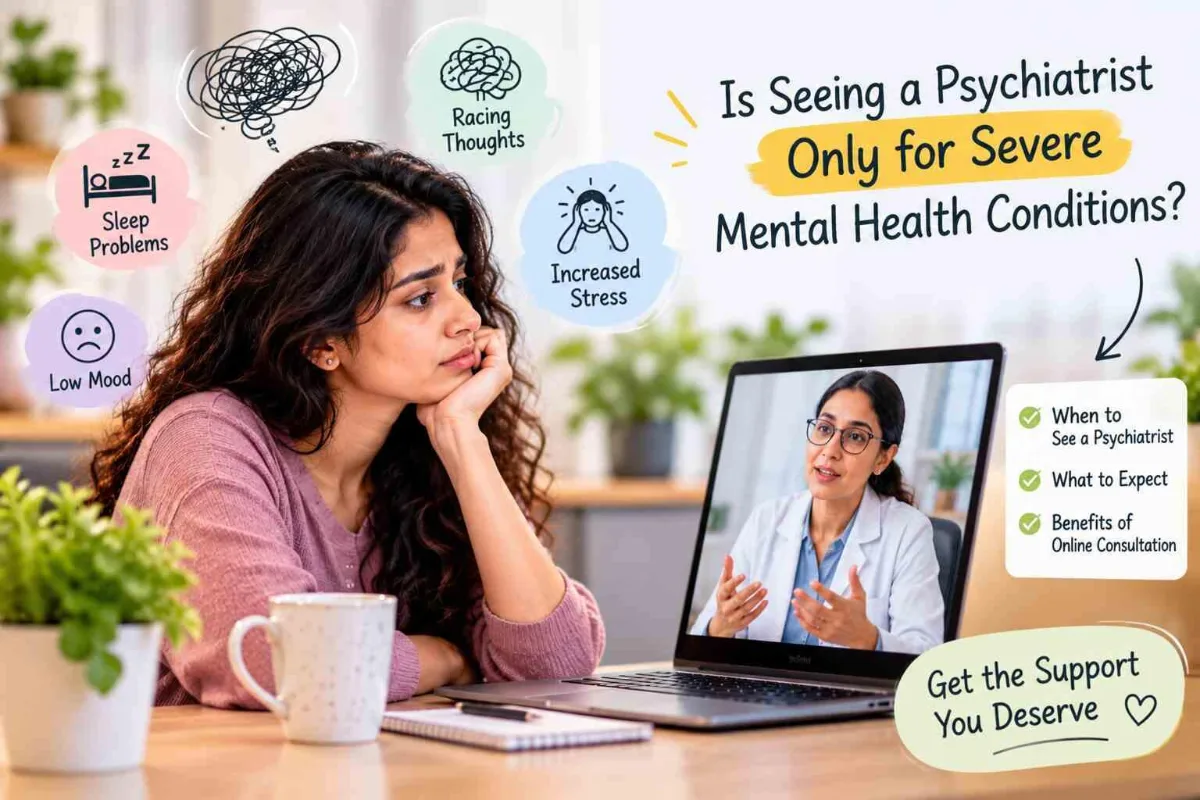
On paper, things are fine. Work gets done, messages get answered, plans get made. But sleep has been patchy for months, your mind keeps racing at 2 a.m., and the things that used to feel good now feel like chores. Is that enough to justify booking a psychiatrist? Plenty of people ask themselves exactly this, and plenty talk themselves out of it because it doesn’t seem serious enough. A short online psychiatrist consultation can help sort out what is going on, and the answer to the title question is a lot more flexible than the old stereotype suggests.
Where the “Only for Severe Cases” Idea Comes From
Psychiatry has carried a heavy image for a long time. Films and rumours tend to link it with hospital wards, extreme episodes, and long-term medication. That picture leaves out most of what psychiatrists see in a typical week: people dealing with anxiety, low mood, burnout, sleep trouble, attention problems, or a rough patch that has stretched longer than expected.
Severity does matter in some cases. Someone in acute distress needs urgent care. But a condition does not have to reach crisis level to deserve a proper assessment, and waiting for things to get worse often means more weeks of struggling than necessary.
Reasons People See a Psychiatrist Before Things Become Severe
A psychiatrist is a medical doctor trained in mental health, which makes them a sensible first stop in several situations. Common reasons include:
- Low mood, worry, or irritability that has lasted for weeks and is not lifting
- Sleep issues that keep returning despite good habits
- Trouble focusing, finishing tasks, or staying organised, which could point to ADHD
- Panic attacks, intense fears, or racing thoughts
- Unexplained physical symptoms, such as a tight chest or stomach trouble, that may connect to stress
- Side effects from a medication already being taken for mental health
- A wish for a second opinion on a diagnosis or treatment plan
- Big life changes, such as a move, a loss, or a new job, that feel heavier than expected
None of these has to look dramatic from the outside. If a pattern is affecting work, relationships, or daily comfort, an assessment is reasonable.
What a Psychiatrist Actually Does
A psychiatrist listens first. The conversation covers symptoms, sleep, appetite, stress, medical history, and family background, then moves toward a working picture of what might be happening. From there, options vary. Some people leave with a diagnosis and a medication plan. Others leave with a recommendation for therapy, sleep changes, or a follow-up in a few weeks. Medication is one tool, and it gets used only when it fits the situation.
The difference from a psychologist or counsellor is the medical training. Psychiatrists can diagnose conditions, rule out physical contributors, and prescribe medication. Many people end up working with both, with the psychiatrist handling the medical side and a therapist handling the day-to-day work.
Why an Online Psychiatrist Consultation Works for Many People
Getting to a clinic can be the first obstacle. Travel time, waiting rooms, and the worry of being recognised can put people off before the appointment even starts. An online session removes most of that. It happens from a quiet room at home, at a time that fits the day, with no commute.
For people in smaller towns, the reach matters too. Specialists can be hard to find nearby, and video consultations widen the pool. Many people also say they open up more easily in a familiar space, which can lead to a more honest first conversation.
What the First Session Looks Like
A first online psychiatrist consultation is mostly a conversation. Expect questions about what has been happening, how long it has been going on, and how it affects daily life. It helps to note down symptoms, sleep patterns, and any medicines beforehand. The psychiatrist may suggest a plan, ask for blood tests to rule out physical causes, or schedule a follow-up. Nobody is expected to arrive with a diagnosis or a perfect explanation.
Conclusion
Seeing a psychiatrist is not a sign that things have fallen apart. It can simply be a way to understand what is happening and decide what comes next, at any stage. At Zenup Health, our team offers an online psychiatrist consultation with qualified professionals, so getting an expert opinion does not require travel or a long wait. If you have been wondering whether your situation counts as serious enough, reach out to Zenup Health and book a session to find out.
Frequently Asked Questions
Is a referral needed to see a psychiatrist?
Many clinics accept direct bookings, so a referral is often not required. Check with the provider before booking.
Will seeing a psychiatrist mean going on medication?
Not automatically. Some people receive medication, others receive therapy recommendations or lifestyle guidance, and some receive a combination.
Is it okay to book if my symptoms feel mild?
Yes. Early assessments can clarify whether something needs treatment, and they often take pressure off. An online psychiatrist consultation is a low-effort way to get that clarity.
How is a psychiatrist different from a therapist?
A psychiatrist is a medical doctor who can diagnose and prescribe medication. A therapist focuses on talk-based treatment, and the two often work together.
Is the session private?
Reputable providers follow confidentiality standards and use secure platforms. It helps to take the call somewhere you will not be overheard.
