 Skip to content
Breathing Exercises for Students Dealing With Academic Pressure
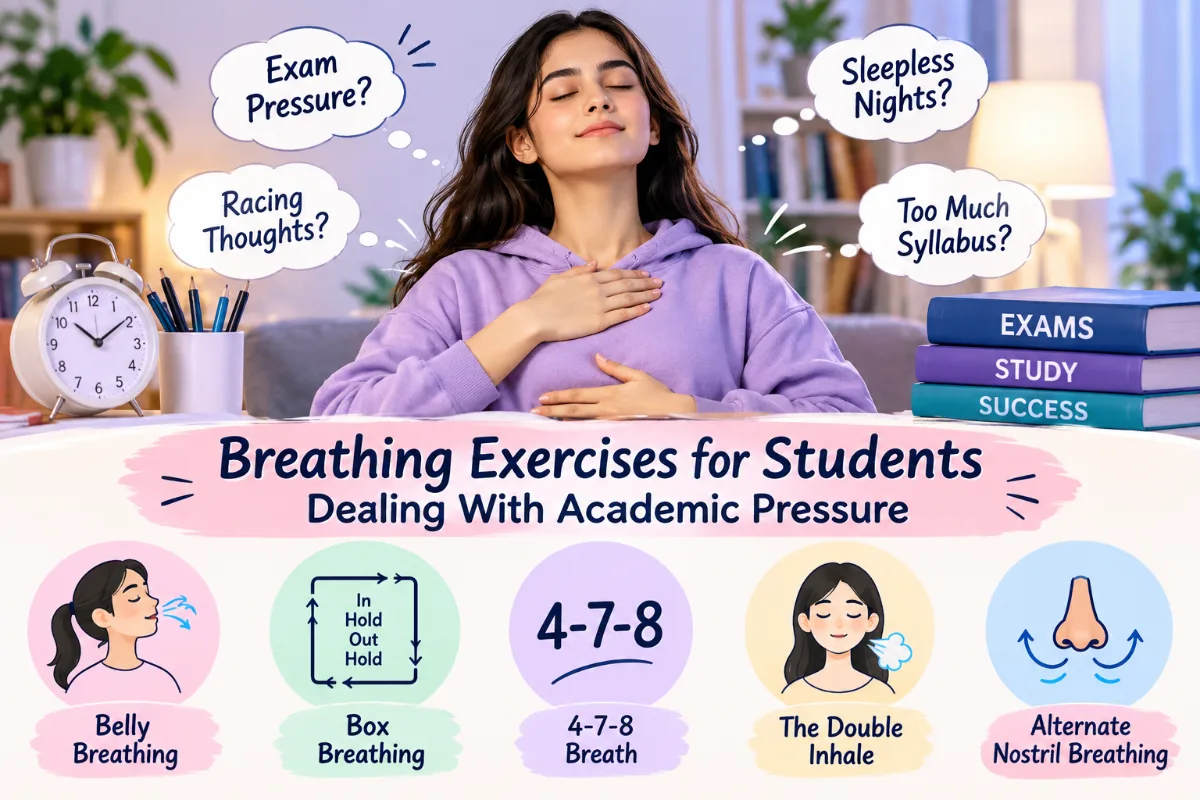
Exam season has a way of making ordinary things feel urgent. Your chest feels tight in the library, your mind blanks halfway through a paper, and sleep gets shorter the closer the date comes. Breathing exercises will not shrink your syllabus, but they can calm your body while you work through it. This guide covers five simple techniques you can use at your desk, in bed, or in the exam hall, and explains how a breathing therapist can help when the stress keeps coming back.
Why Slow Breathing Settles Exam Stress
Under pressure, breathing tends to turn quick and shallow, centred high in the chest. That pattern goes along with a racing heart and a feeling of panic, and it can feed itself. Slowing the breath, especially making the exhale longer than the inhale, gives your body a cue to ease off. Many students notice their shoulders drop and their thoughts slow within a few minutes.
None of this makes the exam easier. It changes how your body carries the stress, which makes it easier to think, revise, and sleep.
Five Breathing Exercises for Students
Try each one while you are calm first, so it feels familiar when you need it:
1. Belly breathing
Sit with your back straight and rest one hand on your stomach. Breathe in through your nose for about four counts so your stomach rises, then breathe out slowly through your mouth for six. Repeat for two to three minutes. It works well before you start a study session.
2. Box breathing
Breathe in for four counts, hold for four, breathe out for four, and hold for four. Picture tracing the sides of a box. Five or six rounds between study blocks, or while you wait for the question paper, is enough.
3. The 4-7-8 breath
Breathe in through your nose for four counts, hold for seven, and breathe out through your mouth for eight. Start with four rounds. Students often use it in bed when their mind keeps replaying how much is left to cover.
4. The double inhale
Take a full breath in through your nose, then add a short second sip of air on top, and let everything out in one long exhale through your mouth. It is sometimes called the physiological sigh. Two or three of these are quiet enough to do at your desk in the exam hall when panic starts.
5. Alternate nostril breathing
Close your right nostril with your thumb and breathe in through the left. Switch, closing the left with your ring finger, and breathe out through the right. Breathe in through the right, switch, and breathe out through the left. That is one round. Do five rounds in the evening, and skip it if your nose is blocked.
Go gently with all of these. If you feel dizzy or tingly, return to normal breathing. People with asthma, heart or lung conditions, or who are pregnant should check with a doctor before doing long breath holds.
Making Breathing Part of Your Study Routine
Short and regular works better than long and occasional. Two or three minutes after you wake up, once between study blocks, and once before bed adds up to a routine without taking time away from revision. Pair it with something you already do, such as sitting down at your desk or switching off your lamp. On exam day, do a few slow rounds before leaving home and keep the double inhale for the hall, since it is quiet and takes only a few seconds.
A breathing therapist can make this easier. They watch how you actually breathe, notice habits like holding your breath while concentrating, and adjust the pace to suit you. That matters because the same exercise can feel calming for one student and strained for another.
When to Talk to a Breathing Therapist
Self-help is a good start, but it has limits. Consider reaching out if any of these last for more than a couple of weeks: trouble sleeping most nights, a racing heart or tight chest before every test, avoiding your books because starting feels overwhelming, or dread that does not lift even after exams end. These can be signs the pressure has moved beyond ordinary exam nerves, and talking to someone can help.
Conclusion
Academic pressure is real, and so is the way the body responds to it. Belly breathing, box breathing, the 4-7-8 breath, the double inhale, and alternate nostril breathing give you five ways to settle yourself, whether you are at your desk, in bed, or in the exam hall. If the pressure keeps winning, a breathing therapist can build a routine around you, and the team at Zenup Health can help you take that first step.
FAQs
How long should I practise each day?
Two to five minutes, once or twice a day, is enough to start. A few steady rounds do more than a long session you dread.
Can breathing exercises stop panic during an exam?
They can take the edge off, but they are not a guarantee. They work best when you have practised beforehand, so the technique feels automatic when your pulse is up.
Who can teach me breathing techniques properly?
A breathing therapist can guide you through the exercises, check your technique, and match them to what you feel, whether that is a tight chest, racing thoughts, or trouble sleeping. A school or college counsellor can also help.
Is feeling this much pressure about marks normal?
Many students feel it, especially around board exams and entrance tests. Pressure on its own is common. What matters is whether it is getting in the way of sleep, studying, or daily life. If it is, ask for support early.
