Online Trauma & Grief Counselling in India
Heal at your own pace, with qualified support.
Whether you are living with the aftermath of a frightening experience or the pain of losing someone or something that mattered deeply, you don't have to work through it alone. Connect with qualified psychologists for confidential trauma therapy and grief therapy online, across India.
- Qualified psychologists
- Confidential sessions
- Paced around you
- Online across India

Private one-on-one video sessions
When the past won't stay in the past, or loss won't ease
Maybe memories keep returning when you least expect them.
Maybe you avoid places, people or conversations that remind you of what happened.
Maybe it has been months since you lost someone, and the longing still feels as sharp as the first day.
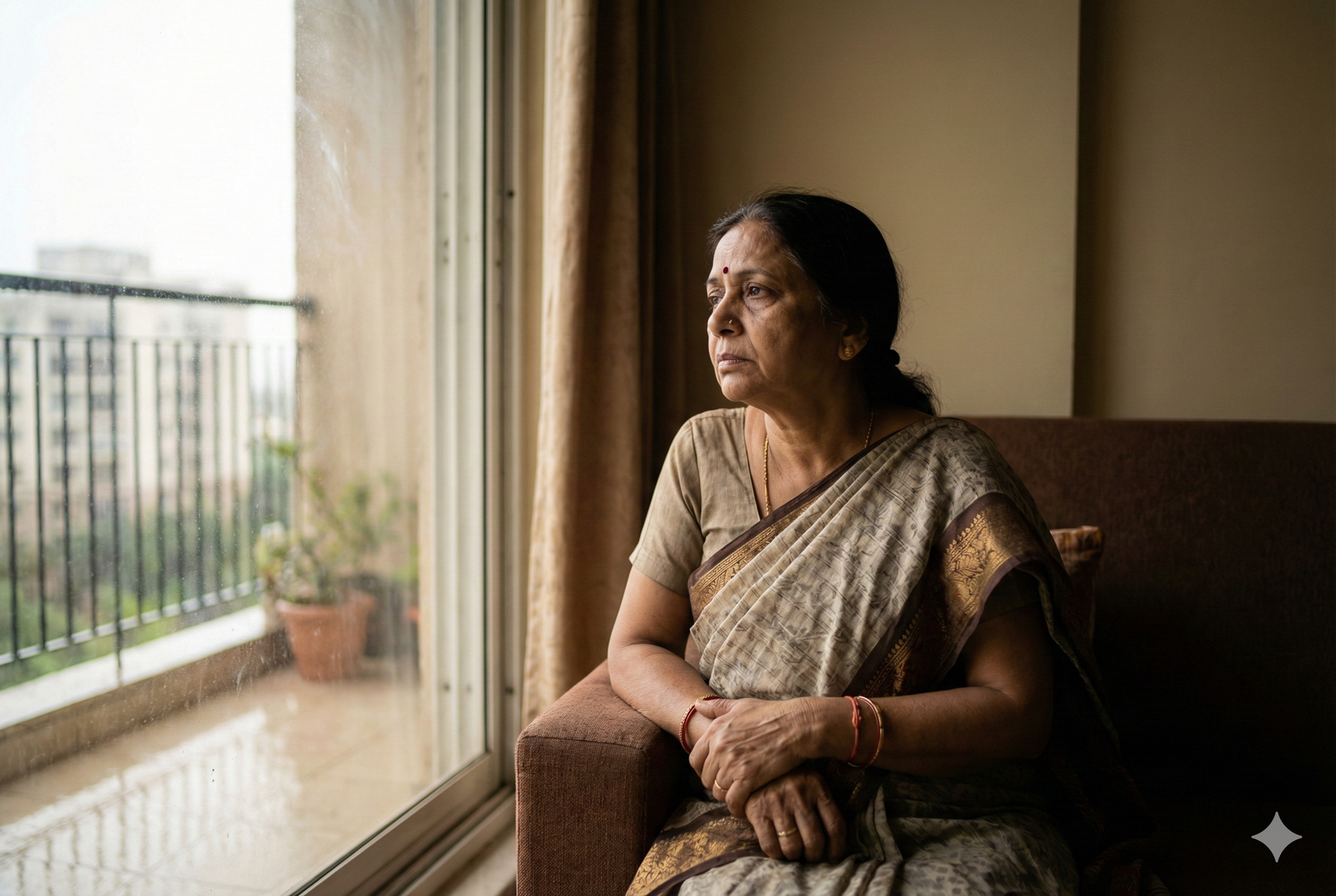
You may notice
- Flashbacks, intrusive memories or nightmares
- Feeling constantly on edge, jumpy or unable to relax
- Avoiding reminders of a painful event or a person you lost
- Emotional numbness or feeling disconnected from others
- Guilt, shame or "what if" thoughts that won't go away
- Trouble sleeping, concentrating or getting through the day
- Waves of intense sadness, anger or yearning
- Feeling stuck, as if life has stopped while everyone else moves on
You don't have to carry this on your own
You don't need to wait until things feel unbearable to ask for help.
Understanding trauma and its effects
What trauma is
Trauma is the lasting emotional and physical response to an overwhelming experience, such as an accident, assault, abuse, medical emergency, disaster or sudden loss.
It is not a sign of weakness. It is how your mind and body tried to protect you.
- An overwhelming eventAn accident, assault, abuse, emergency, disaster or sudden loss.
- Strong reactionsFear, shock and distress are common in the days and weeks after.
- Reactions that settleFor many people, these ease with time and support.
- Symptoms that lastWhen they persist and affect daily life, a professional can assess for PTSD.
How trauma can affect you
After a traumatic event, many people have strong reactions that settle with time and support.
When symptoms last and begin to affect your sleep, work, relationships or daily life, a qualified professional can help assess whether you are experiencing post-traumatic stress disorder (PTSD) and what support may help.
Your body
A racing heart, tension, startling easily, disturbed sleep, exhaustion or feeling on high alert.
Your thoughts
Intrusive memories, nightmares, self-blame, or a sense that the world is no longer safe.
Your feelings
Fear, anger, shame, numbness or feeling cut off from people you care about.
Your behaviour
Avoiding reminders, withdrawing from others, or staying constantly busy to keep memories away.
Talk it through with a professional
You don't need to diagnose yourself before reaching out. Your psychologist will help you understand what you are experiencing and what kind of support makes sense.
Trauma therapy, built around your pace
Trauma therapy is a form of psychological treatment that helps you process distressing experiences, reduce their hold on your daily life and rebuild a sense of safety. It does not require you to relive everything in the first session.
Trauma therapy can help you
- Process distressing experiences at a pace that feels safe
- Reduce the hold memories have on your daily life
- Feel steadier with grounding and coping skills
- Rebuild a sense of safety in your body and mind
- Face reminders without feeling overwhelmed
- Stay in control of what you share, and when
Feel steadier first
Your therapist may start by helping you feel steadier, with grounding and coping skills, before moving into deeper work. You learn practical tools so that difficult feelings feel more manageable.
- GroundingBring yourself back to the present when memories surge.
- SleepTools for nights disturbed by nightmares or racing thoughts.
- Emotional regulationSteadier responses to fear, anger and sadness.
- Understanding reactionsMake sense of what your mind and body are doing.
- Triggers and anniversariesPlan ahead for reminders and difficult dates.
- Your paceDeeper processing happens only when you are ready.
If worry and stress are the main concern, see anxiety & stress counselling.
Grief therapy: support for loss in all its forms
Grief therapy offers a space to talk about your loss, make sense of what you feel and find ways to carry it. Grief is a natural response to loss, and it is not only about death. It can follow the end of a relationship, a major illness, a lost job or a changed future.
Bereavement
Losing a partner, parent, child, sibling or friend.
Anticipatory grief
Grieving in advance when a loved one is seriously ill.
Disenfranchised grief
Loss that others do not recognise or acknowledge.
Ambiguous loss
Loss without clear closure, such as a missing person or a loved one with dementia.
Traumatic grief
Loss that was sudden, violent or unexpected.
Prolonged grief
When intense longing or preoccupation continues and makes daily life very hard. It is a recognised condition that responds to professional support.
Most people find that grief gradually becomes easier to live with. A therapist can help you understand where you are, without rushing or judging how you grieve.

Which psychologist for PTSD, trauma or grief?
If distressing memories, avoidance, nightmares or intense grief are affecting your daily life, you can speak with a qualified psychologist. A psychologist for PTSD can assess your symptoms, listen to your experience and recommend a treatment plan, which may include trauma-focused psychotherapy.
Feeling overwhelmed right now?
Breathe along with the circle: in for 4 seconds, hold for 2, and out for 6. A slower out-breath can help your body settle.
It may be time to speak with a psychologist if
- Distressing memories or nightmares continue beyond a few weeks
- You feel constantly on edge or unable to relax
- You are avoiding places, people or conversations
- Grief still feels overwhelming months after a loss
- Your sleep, work or relationships are being affected
- Your trauma or loss happened years ago and still weighs on you
Where it would help, your psychologist may also suggest a consultation with a psychiatrist. You don't need to diagnose yourself before reaching out.
Zenup is not an emergency service. If you are in crisis or having thoughts of harming yourself or ending your life, call Tele-MANAS on 14416 or 1-800-891-4416 (free, 24/7), dial 112, or go to your nearest hospital.
What happens when you start counselling?
A clear, gentle path from your first conversation to moving forward. You set the pace.
Start where you are
Share what feels most important right now. You don't have to tell the whole story in your first session.
First sessionUnderstand what you're experiencing
Your therapist listens, asks about your history and supports, and helps you understand your reactions.
Set goals and choose an approach
Together you decide what you want to change and which approach suits you, including how often to meet.
Build safety and skills
Learn practical tools for sleep, grounding and emotional regulation so that difficult feelings feel more manageable.
Ongoing sessionsProcess and move forward
When you feel ready, you work through painful memories or the meaning of your loss, then plan for triggers, anniversaries and everyday life.
How many sessions will I need?
It depends on your experiences, symptoms and goals. Your therapist will discuss an expected plan after your assessment and review it regularly with you.
You decide what to share. Deeper processing happens only when you are ready, and it is never too late to ask for support, even if your trauma or loss happened years ago.
Evidence-based approaches for trauma and PTSD
Depending on your needs, your therapist may use one or more evidence-based approaches. They will explain which approach may suit you and why, and you stay in control of the pace.
Your therapist may explore
- What feels most important to you right now
- Your history and the support around you
- How your reactions affect sleep, work and relationships
- Reminders, places or conversations you may be avoiding
- What feels safe to talk about, and when
- What you want to change

Trauma-focused CBT
Explores how trauma shapes your thoughts, feelings and behaviour, and helps you gradually process what happened.
- Focus
- The link between trauma, thoughts, feelings and behaviour
- What sessions involve
- Gradual, structured processing at a pace you agree with your therapist
- What you take away
- Practical skills you can keep using on your own
Cognitive Processing Therapy (CPT)
Helps you examine beliefs that keep you stuck, such as self-blame or feeling permanently unsafe.
- Focus
- Beliefs about yourself, others and the world after trauma
- What sessions involve
- Noticing stuck points and looking at them from new angles
- What you take away
- More balanced, compassionate ways of seeing what happened
Prolonged Exposure (PE)
Supports you in gradually facing memories and situations you have been avoiding, with a therapist guiding every step.
- Focus
- Reducing avoidance of memories and reminders
- What sessions involve
- Planned, gradual steps with support throughout
- What you take away
- Getting back places and activities trauma has taken away
EMDR
A structured approach that helps the brain process distressing memories so they feel less overwhelming.
- Focus
- Processing distressing memories
- What sessions involve
- A structured protocol led by a trained therapist
- What you take away
- Memories that feel less intense and less present
Clinical guidelines recommend trauma-focused psychotherapies such as CBT, Cognitive Processing Therapy and Prolonged Exposure, and EMDR is also recommended or suggested in major guidelines. Where it would help, your psychologist may suggest a psychiatric consultation alongside therapy.
| Approach | Main focus | What sessions involve |
|---|---|---|
| Trauma-focused CBT | How trauma shapes thoughts, feelings and behaviour | Gradually processing what happened |
| CPT | Beliefs that keep you stuck | Examining self-blame and feelings of being unsafe |
| Prolonged Exposure | Avoided memories and situations | Gradually facing them, guided at every step |
| EMDR | Distressing memories | A structured approach to processing them |
Meet our trauma and grief therapists
Qualified psychologists who offer a safe, paced and respectful space for trauma and loss.
 11+ years experience
Bhoomi Doshi
Masters in Clinical Psychology
PGD in Trauma & Grief TherapySpeaks English, Hindi, Gujarati
Book a session 4+ years experience
 6+ years experience
Simran Rahaman
Masters in Applied Psychology
PDCP (RCI licensed)Speaks English, Hindi, Bengali, Urdu
Book a session 5+ years experience
Kajal Diwan
Masters in Psychology
PGD in Early DevelopmentSpeaks English, Hindi, Gujarati
Book a session
How to get started
Four simple steps from this page to your first session.
Book a session
Choose individual therapy or a psychiatric consultation on our booking page.
Pick a time
Choose a slot that fits around work, college or home.
Attend online
Join a private video call on Google Meet or Microsoft Teams.
Begin your plan
Agree on goals, an approach and how often to meet.
Why choose Zenup Health?
Qualified professionals
Work with psychologists trained to support trauma, PTSD and grief.
Confidential and respectful
Speak openly in a private space, without judgement. Never recorded.
Paced around you
You decide how much to share and when. Your therapist adapts to what feels safe.
Online across India
Attend sessions from home or another private place, in English, Hindi and other Indian languages.
A safe place to start
Not sure what you need? Begin with a conversation and we'll help you find the right support.
Therapy sessions
60 minutes, online. Fees depend on the therapist's experience, with options for different budgets.
Psychiatric consultation
₹1,400 first consultation, ₹1,200 follow-ups. 30–45 minutes.
Is online trauma therapy right for you?
Many people find online trauma therapy and grief counselling easier to start because they can speak from a familiar, private space. Clinical guidelines support delivering trauma-focused therapy by video when attending in person is not possible.
A 2021 review of 57 studies found that mental health care delivered by video produced results largely equivalent to in-person care.Batastini et al., Clinical Psychology Review, 2021
To get the most from online sessions, find a private room, use a reliable internet connection and keep a glass of water or a grounding object close by. Your therapist will talk with you about whether online sessions suit your situation and will agree a plan if you feel overwhelmed during a session.
You can attend your session from
- HomeA familiar place where you feel safe talking.
- A private workspaceUseful when fitting counselling around a busy day.
- Any other private placeWith a reliable internet connection and enough privacy.
| Online with Zenup | Traditional in-person | |
|---|---|---|
| Getting there | No travel. Join from home or a private room. | Travel to a clinic and wait. |
| Scheduling | Easier to fit around work or classes. | Limited to clinic hours and location. |
| Choice of therapist | Professionals from across India. | Usually those near you. |
| Privacy | One-on-one video call, never recorded. | Private room; others may see you arrive. |
| Setting | Somewhere familiar where you feel at ease. | The therapist's office. |
| Best suited for | Busy schedules and when in-person sessions aren't possible. | Severe symptoms, crisis care and in-person assessment. |

What could change with the right support?
Therapy does not erase what happened or take away the love behind your grief. The aim is to help the past feel less present and your loss feel more bearable. Over time, you may notice:
Less time on high alert
Fewer intrusive memories and less time feeling on edge.
Steadier days and nights
Better sleep and steadier emotions.
Facing reminders
More ability to face reminders without feeling overwhelmed.
Remembering with love
Space to remember someone with love, not only pain.
Renewed connection
Reconnecting with people and activities that matter to you.
Safety and control
A growing sense of safety and control in your life.
Frequently asked questions about trauma & grief counselling
Can't find your answer? Contact us.
What is trauma therapy?
Trauma therapy is a form of psychological treatment that helps people process distressing experiences and reduce their ongoing effects, such as flashbacks, avoidance, anxiety and sleep problems. Approaches include trauma-focused CBT, Cognitive Processing Therapy, Prolonged Exposure and EMDR.
What is grief therapy?
Grief therapy is professional support for people coping with loss. It gives you space to express what you feel, make sense of the loss and find ways to live with it. It is not about “getting over” someone.
How do I know if I need a psychologist for PTSD?
Consider seeing a psychologist if distressing memories, nightmares, avoidance or feeling constantly on edge continue beyond a few weeks and affect your sleep, work or relationships. A psychologist can assess what you are experiencing and suggest suitable treatment.
Can PTSD be treated with therapy?
Yes. Clinical guidelines recommend trauma-focused psychotherapies such as CBT, Cognitive Processing Therapy and Prolonged Exposure, and EMDR is also recommended or suggested in major guidelines. The right approach depends on your needs.
How long does grief last?
There is no fixed timeline. Many people find that the intensity gradually eases, while others continue to feel overwhelmed for much longer. If grief feels stuck, or is affecting your daily life months after a loss, grief therapy may help.
What is the difference between grief and depression?
Grief usually comes in waves and is tied to the loss, and people often still feel moments of connection or warmth. Depression involves a more constant low mood and loss of interest and self-worth. They can overlap, and a psychologist can help you tell them apart.
What is prolonged grief disorder?
Prolonged grief disorder is a recognised condition in which intense longing for, or preoccupation with, the person who died continues for an unusually long time and affects daily life. ICD-11 uses a minimum of 6 months and DSM-5-TR uses 12 months for adults. Only a qualified professional can assess this.
Will I have to talk about everything that happened in my first session?
No. You decide what to share. Your therapist will start by understanding your goals and helping you feel safe, and deeper processing happens only when you are ready.
Can I have trauma therapy or grief counselling online?
Yes. Online sessions let you speak with a psychologist from a private space of your choice. Your therapist will help determine whether online sessions are suitable for your situation.
How many sessions will I need?
It depends on your experiences, symptoms and goals. Your therapist will discuss an expected plan after your assessment and review it regularly.
Is therapy confidential?
Therapy is intended to be a private and confidential space, subject to applicable professional and legal requirements. Your therapist will explain confidentiality and its limits.
Should I see a psychologist or a psychiatrist?
A psychologist provides assessment and psychotherapy. A psychiatrist is a medical doctor who can prescribe medication. Many people benefit from therapy alone, and your psychologist can advise if a psychiatric consultation would help.
Can I get help if my trauma or loss happened years ago?
Yes. People seek trauma therapy and grief therapy many years after events. It is never too late to ask for support.
No questions match that search. Try another word.
You don't have to carry this alone
Trauma and loss can change how safe the world feels, but support is available and healing is possible. You can start with a single conversation.
- Qualified psychologists
- Confidential, never recorded
- Online across India
In a crisis? Zenup is not an emergency service. Call Tele-MANAS 14416 (free, 24/7) or 112.